How to collect real-time student feedback during the lunch and dinner rush
The meal rush is where campus dining is won or lost, and it is the hardest window to see clearly. This guide explains why lunch and dinner peaks are so demanding, how real-time student feedback complements existing methods, and how to set it up so teams can respond during service.
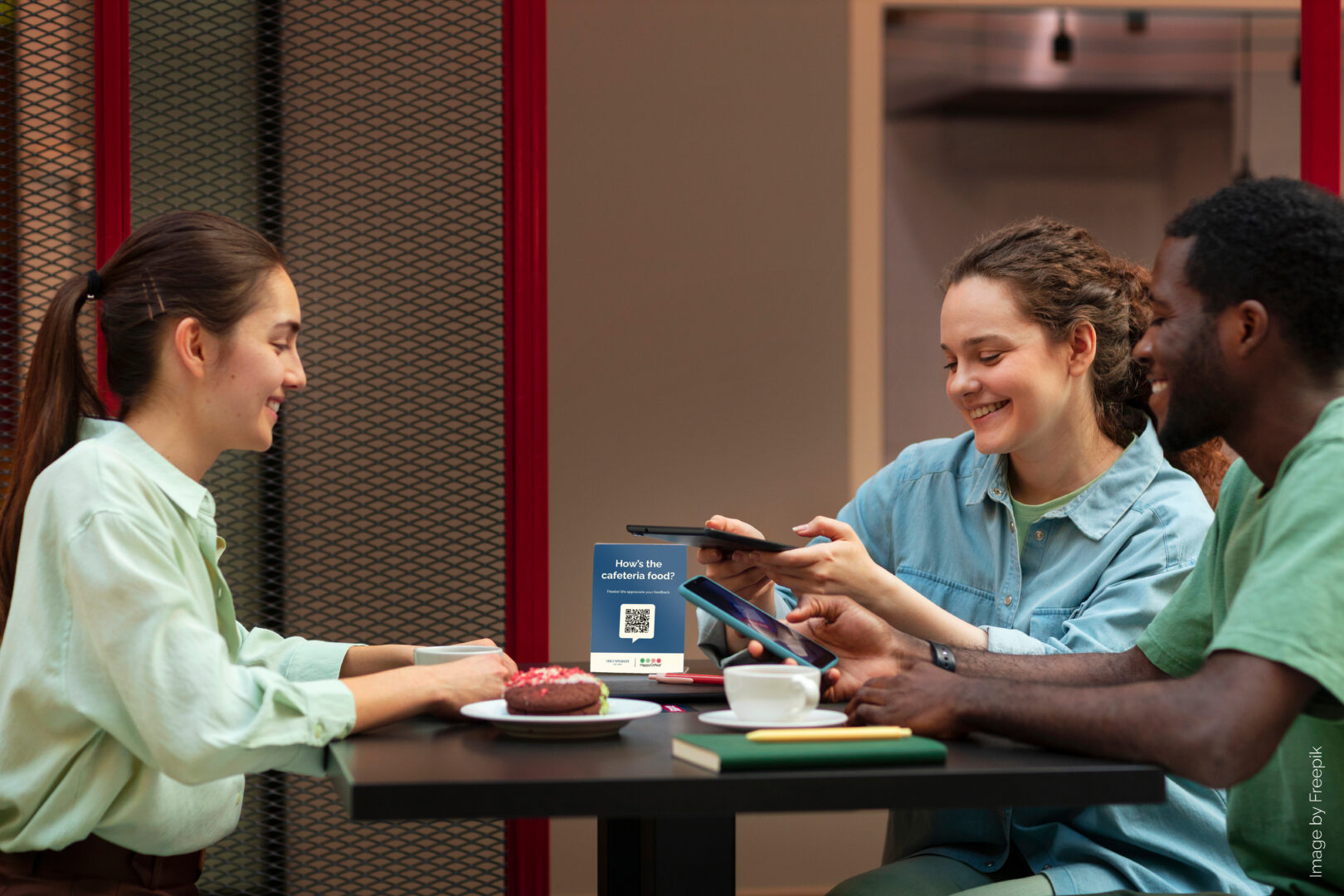
To collect real-time student feedback during the rush, place short, low-friction feedback points where students finish their meal. Configure them so each response is tied to the right location and time, and route threshold-based alerts to on-shift staff so they can respond during the service itself.
Ask any campus dining manager when their day is made or broken and the answer is usually the same: the rush. Lunch and dinner concentrate much of the day’s demand into short windows, and that is when problems are hardest to spot and most costly to miss. A slow line or an empty station at 12:30 p.m. shapes how hundreds of students feel about dining that day, and so does a grill line at 6:45 p.m. when evening classes and practices let out at the same time.
This guide looks at why the meal rush is so demanding, where real-time student feedback fits alongside surveys and benchmarking, and how to collect and act on student dining feedback while there is still time to make a difference. For the wider picture across catering operations, see our guide to real-time dining feedback for catering operators.
Why the rush is the hardest service window
Peak service concentrates demand. Much of a dining hall’s daily traffic tends to arrive in a short window around lunch, and again at dinner, and it is rarely practical to double staff for such a short burst. That leaves teams managing surges with the resources they have, which is where wait times climb and stations run short.
The two peaks are not identical. Lunch tends to be a tight, fairly predictable surge between classes. Dinner is often less predictable: students arrive in waves after labs, practices and evening classes, some stations may be winding down, and staffing can be thinner than at midday. A dinner problem can look quite different from a lunch problem, even in the same hall.
Wait time matters more than it may seem. In a 1994 study of delayed airline passengers, published in the Journal of Marketing, Shirley Taylor found that delays affect how customers evaluate a service, and that the effect works through negative reactions such as uncertainty and anger. The setting was air travel, not dining, but the principle is familiar on campus. A student who waits too long does not only remember the wait. It can color how they rate the meal, the hall and the meal plan.
Where real-time feedback fits alongside other methods
Campus dining teams already have useful tools. Periodic student surveys provide depth and help explain the reasons behind longer-term trends. Benchmarking studies, such as the customer satisfaction survey from the National Association of College & University Food Services (NACUFS), allow comparison with peer institutions. Comment cards and digital channels capture specific issues in students’ own words. Each of these supports meaningful operational and strategic decisions.
Real-time microfeedback adds something different: visibility during the service itself. By capturing short responses as students finish their meal, it gives on-shift teams a current view of how the rush is going. It closes the in-service visibility gap and complements periodic methods rather than replacing them.
How to collect real-time feedback during peak service
Collecting feedback during the rush means making it effortless for students and immediate for staff. A few principles make it work:
- Place feedback where students finish. Put feedback points at the exit, the tray return or another point students pass after their meal, so responding takes a moment on the way out.
- Keep the interaction short. Start with a quick rating, then ask only what is needed for action, such as a focused follow-up about the wait, the food or the staff, with an optional comment. A short, easy interaction is more likely to be completed during a busy period.
- Configure for the level of detail you need. A feedback point at the main exit tells you the time and the hall. It only identifies a specific station if the setup captures it, for example a dedicated feedback point at each station, separate QR or NFC codes per counter, or a follow-up question asking which station the student used.
- Use the right format for the space. Smiley Terminal™ suits a busy exit where students keep moving, Smiley Touch™ works where students can pause briefly and answer a follow-up, and Smiley Sign™ with QR or NFC works at counters or tables where a device is not practical.
From responses to signals during the rush
Each student who taps a button submits a response. Individual responses are not, on their own, a reason to act. Brought together, they become feedback, and the meaningful patterns within that feedback become signals that tell teams where attention may be needed. The Food Experience approach follows that progression:
Responses → Feedback → Signals → Action → Measured performance
During a busy service, the aim is to generate enough responses to surface timely patterns, such as satisfaction at one station falling over a 20-minute window. How many responses that takes depends on footfall, placement and setup, so it helps to read results alongside response volume rather than treating any single response as a verdict.
A satisfaction result can show that performance changed, but not automatically why. To find the driver, teams look across four questions: WHAT part of the experience is affected, WHERE it is happening, WHEN it started and WHY. A focused follow-up question, such as asking whether the issue was the wait, the food or the service, and optional comments help answer the WHY. A quick look at the line confirms it before the team acts.
Acting during this service and the next
Action can happen on different timescales, and the rush calls for all three:
THIS SERVICE → NEXT SERVICE → ACROSS THE PORTFOLIO
- THIS SERVICE: respond in the moment. Teams can configure Real Time Alerts as threshold-based notifications, for example when satisfaction at a feedback point falls below a set level over a set number of responses. The on-shift manager is notified and can open another line, restock a station or redeploy staff while the rush is still on.
- NEXT SERVICE: improve what happens next. Patterns that repeat, such as a dip at the grill every weekday dinner between 6:30 and 7:00 p.m., point to changes in staffing, prep timing or station opening hours for the next service.
- ACROSS THE PORTFOLIO: scale what works. Comparing results across dining halls shows which approaches work best at peak and helps teams share them. Chartwells, which uses HappyOrNot across a large number of United States campuses, reviews dining feedback by the hour to see when and where satisfaction dips across locations.
A dinner example shows how these fit together. Suppose satisfaction at the grill station dips on weekday evenings just after 6:30 p.m., and the follow-up question shows most unhappy responses citing the wait. The manager on shift adds a second cook for the remainder of that service. The next week, the team schedules that extra cover from the start of the dinner peak, then checks whether satisfaction in that window has recovered.
What to measure during peak periods
A few measures make the rush manageable:
- Satisfaction by hour. The reading that shows when the experience dips through the peak.
- Satisfaction by station. Which part of the hall is under strain, so help goes to the right place.
- Response volume through the rush. Enough responses within the window to read the pattern with confidence.
- Recovery after action. Whether the score improved once the team responded, so you learn what works.
Key takeaway
The lunch and dinner rush is where campus dining satisfaction is shaped, and periodic methods were not built to show how a service is going while it is still running. Real-time feedback fills that gap alongside them. Make it effortless for students and immediate for staff: a quick tap at the exit, tied to the hour and station, with threshold-based alerts routed to whoever is on shift. Done well, the rush becomes something teams can manage while the meal is still being served.
Explore how HappyOrNot helps food service teams capture student feedback at the point of experience and act on it during peak service. You can also read our guide to how to measure food experience.