200+
guest responses per spa each month
Up to 40%
participation rate
Up to 70%
of feedback givers leave written comments
90+
Happy Index scores held at the spas every week since launch
The challenge: consistency across resort operations
Kalahari Resorts & Conventions is one of the largest family-owned resort operators in the United States. Founded 26 years ago and headquartered in Wisconsin Dells, Wisconsin, it runs family-friendly resorts and convention centers in Wisconsin Dells; Sandusky, Ohio; Round Rock, Texas; and the Pocono Mountains in Pennsylvania, with a new property opening soon in Spotsylvania, Virginia. Each location combines hotel rooms, indoor water parks, indoor adventure parks, dining and convention spaces, all under one roof.
That scale is exactly what makes a consistent guest experience hard to deliver. A guest moves through the spa, the water park, the restaurants and check-in as though it were one seamless visit while behind the scenes each of those is a separate operation with its own team. As Dustin Sanders, Corporate Director of Guest Experience, describes the challenge:
“It is all one symbiotic machine to the guest, but in the background, it is multiple silos all over the place trying to execute to their highest level.”
Before HappyOrNot, Kalahari measured its spa experience through a standard post-stay survey. It was generic, easy to ignore and reached only hotel guests, which missed the local clientele and seasonal pass holders, who are central to a spa’s business. A busy month at a spa might return only around 16 responses, with little constructive detail to act on.
More feedback, clearer insights
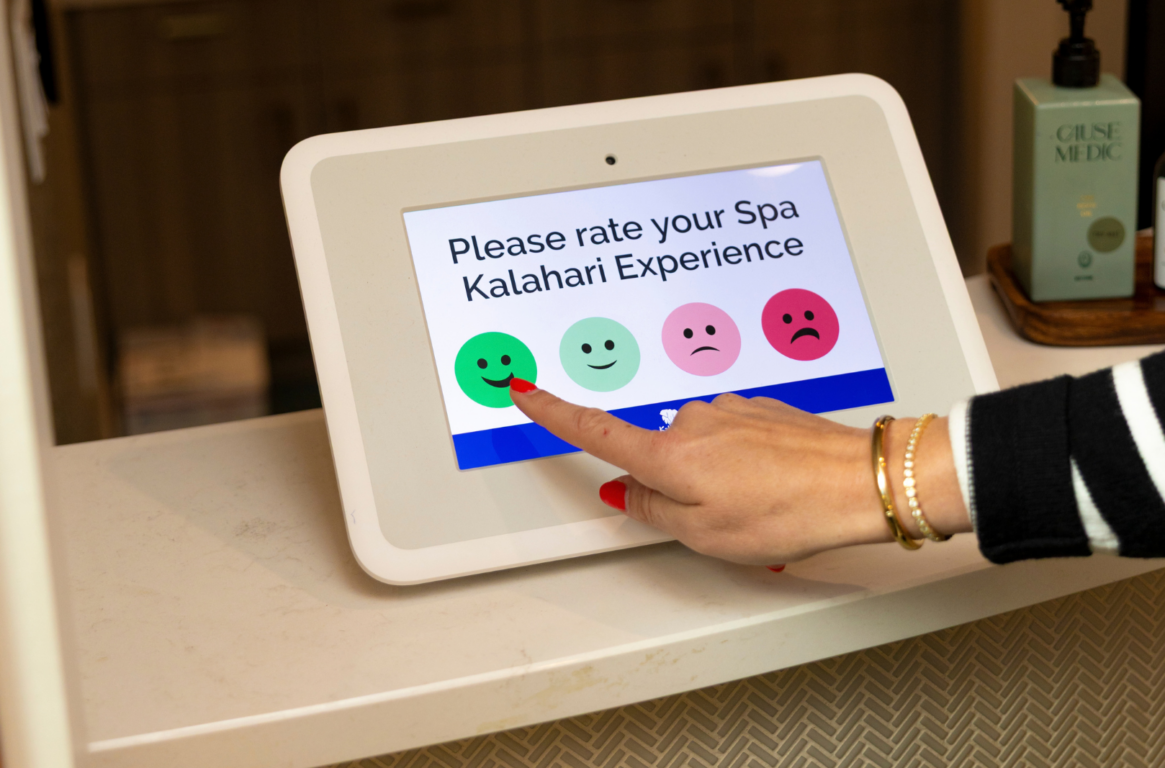
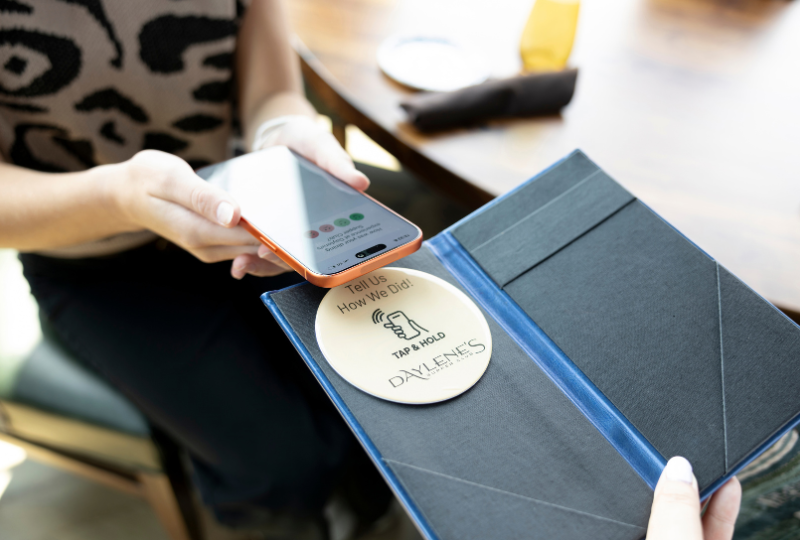
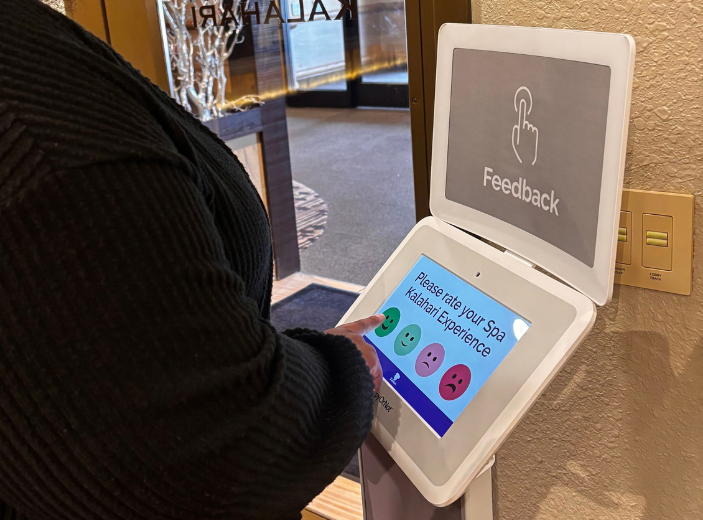
Kalahari began its journey with HappyOrNot in August 2025, focusing on two parts of the operation where in-the-moment feedback would matter most. In the spas, it deployed four Smiley Touch™ Stand and Table products across its Wisconsin Dells, Pocono, Sandusky and Round Rock properties at the point of experience. At Daylene’s Supper Club, a new restaurant within the wider organization, the team opted to use Smiley Sign™, placing the NFC-enabled stickers inside the billfold so guests can respond with a simple tap with their phone as they settle the check.
The change in volume was immediate. Moving from a handful of responses a month to more than 200 per spa gave Kalahari the ability to see patterns rather than just isolated complaints.
“More data points means more accurate data and a smaller margin of error. Going from 16 survey responses a month to 200-plus responses per spa really told us the full picture of what our spas were doing.” Sanders says.
Participation at the spas now runs between 30 and 40 percent, well above the 20 percent that would already be considered strong for a traditional survey.
During a particularly busy week at Daylene’s, the Smiley Sign touchpoints gathered roughly 230 responses, with about 167 having written comments. A short, tap-and-go survey at the point of experience meant that people were more inclined to give more details about their experience when giving feedback.
The open feedback given by customers adds context to the scores. Guests name specific dishes they love, which helps the kitchen plan the menu, and they flag operational issues a rating alone would never surface, such as a recurring note about delays in getting cocktails to the table.
Because the feedback is tied to the moment, Kalahari can also more quickly act on the responses in between happy and unhappy. The team follows up not just on red faces but also on the merely semi-happy guest whose locker is stuck or who found the coffee had run out, closing small gaps before they become reasons not to return.

Closing the gap between experience and action
The feedback given by guests flows directly to the people who can act on it. When a guest leaves an unhappy response at a spa, the spa director is emailed and can often respond while the guest is still on site. Sanders points to one spa director who will call the spa desk the moment she sees a red face come through, asking what happened and how it can be put right.
For Sanders, it is all about closing the distance between the moment an experience happens and the moment someone can do something about it and then acting on it.
“It’s an open book test,” he says. “The answers are there if you are asking the right questions and actually listening. Don’t collect the data and just say ‘Okay, we’re good’. Do something with the information.”
That does not mean acting on every request. It means reading the feedback honestly, separating what to fix now from what to plan for later, and using tools like HappyOrNot’s AI-powered feedback summaries to turn volumes of comments into clear themes the team can use.
For example, when feedback at Daylene’s showed a bottleneck at the bar, which was under too much pressure to serve the whole room, the team planned a second bar as the longer-term fix while also making small, quick adjustments to improve the guest experience in the meantime.
Turning guest feedback into staff recognition
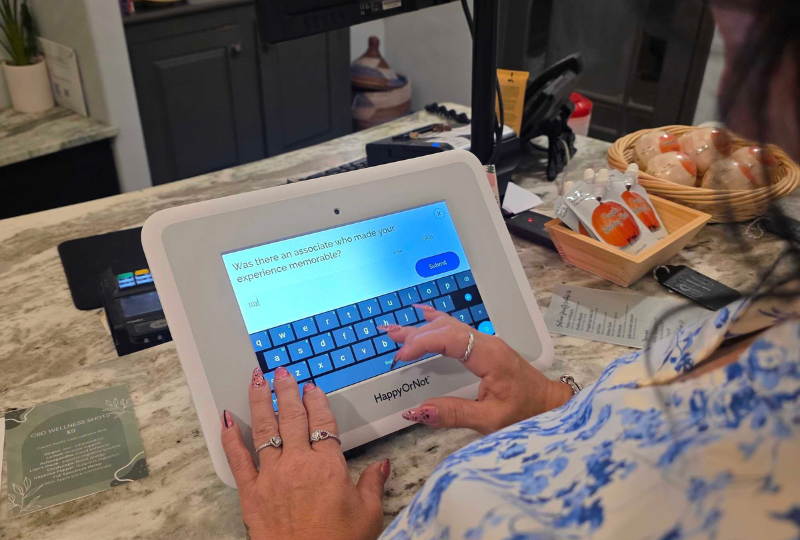
Kalahari has also built staff recognition directly around the feedback. When a guest leaves a happy spa response, they are asked whether there is an associate they would like to shout out. Named team members earn reward points that are redeemable for lunch, a gift card or other rewards. At Daylene’s, guests name staff unprompted, and a tally board in the back tracks mentions through the month.
Sanders keeps the balance deliberate:
“However many comments you bring on the negative side, bring the same amount on the positive side. Highlight what we are doing right, because we want to continue doing those things.”
Happy customers are returning customers
Kalahari’s brand promise is to lead with love and go a little beyond what the guest expects. Not grand gestures, but a consistent sense that the visit was, as Sanders put it, always a little better than they thought it would be.
After taking HappyOrNot into use, Kalahari has moved from a handful of responses to hundreds a month, and from a generic score to a detailed, real-time view of every spa. Those numbers translate into consistency the team can see and hold. Happy Index scores at the spas have stayed in the 90s every week since launch, and Daylene’s has climbed from an opening week around 87 to a steady 94 and above.
The feedback has also changed how the teams feel about their work. Seeing their own names in real guest comments has become a genuine source of pride, and a more motivating measure of performance than a monthly average.
There is also business value in making sure the customers leave with a smile on their face:
“If you can turn an unhappy guest back into a happy, returning one, that’s future revenue that would otherwise have walked out the door.” Sanders says.
About Kalahari Resorts & Conventions
Kalahari Resorts & Conventions, founded by Todd and Shari Nelson, is home to America’s Largest Indoor Waterparks, and offers an unmatched mix of all-under-one-roof experiences for families, vacationers and meeting attendees. With locations in Wisconsin Dells, WI; Sandusky, OH; Pocono Mountains, PA, Round Rock, TX; and a new resort opening in November 2026 in Spotsylvania, VA, each property draws inspiration from the rich culture and vibrant landscapes of Africa. Recognized by USA TODAY’s 10BEST for Best Indoor Water Park and Best VR Water Slide, Kalahari continues to set a standard for family entertainment and hospitality. Across its growing collection of resorts, guests can expect well-appointed accommodations, signature dining, unique retail, expansive indoor and outdoor waterparks, immersive adventure parks, and state-of-the-art convention centers. In 2026, Kalahari introduced its Treehouse Adventures, luxury treehouses located on the shores of Lake Delton in Wisconsin Dells. Select locations also feature full-service spas and wellness destinations, creating the ultimate all-in-one getaway. For the latest news and media resources, visit kalaharimedia.com.
Learn more at kalahariresorts.com.