38,000
student feedback responses in first 12 weeks
39%
decrease in student dissatisfaction
4
Smiley Terminals in rotation
Weekly
reviews introduced across teams
Clearer view of school meal experience with real-time microfeedback
The City of Järvenpää in southern Finland wanted a better day-to-day understanding of how students experienced school meals across multiple schools. With their school meal services supporting students across primary schools, secondary schools, and daycare environments throughout the city, meal satisfaction could vary significantly between locations and days of the week. This meant traditional feedback methods were too infrequent to provide the operational visibility needed to identify issues early or compare meal services across schools.
The city also wanted a more practical and transparent way to collaborate with its food service provider, Palmia, using shared data instead of assumptions or isolated complaints:
“We wanted an instant read on how meals are performing across multiple sites, and a shared way to collaborate with Palmia to make decisions based on real student feedback, not assumptions,” says Petra Pantsar, Sourcing Manager, City of Järvenpää.
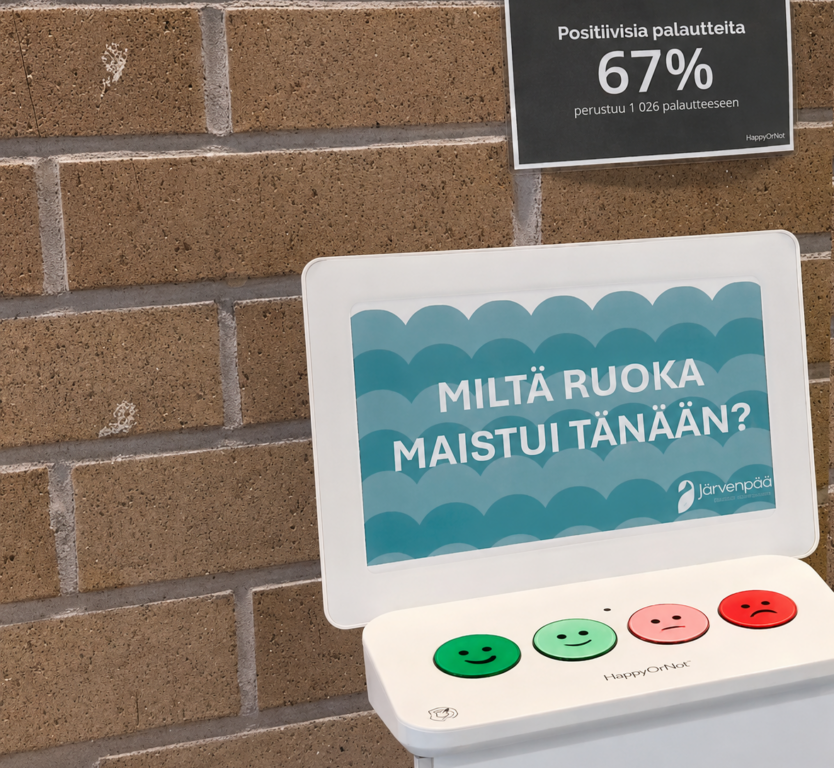
To create a continuous feedback loop that benefits the city, Palmia, and students, Järvenpää introduced the HappyOrNot solution to monitor school meal services in August 2025. The setup included four Smiley Terminals that were rotated between locations to cover all schools.
The simplicity of HappyOrNot proved important from the start. Students immediately understood how to use the terminals – regardless of age group or school environment – and leave feedback in seconds during everyday meal service by simply pressing a smiley button.
“Before starting, I recorded a two-minute video on how to use the Smiley Terminals, but I actually think it was more for the adults. The kids just picked it up by looking at it,” says Pantsar.
The setup gave both the city and Palmia a low-friction, real-time feedback signal directly connected to the actual meal experience. Instead of waiting for delayed surveys or occasional complaints, teams could monitor satisfaction while it was still operationally relevant.
From anecdotal comments to actionable patterns
Within the first 12 weeks, the Smiley Terminals collected 38,000 student feedback responses across the schools, and has so far collected over 100 000 responses during the 2025-2026 school year. The response volume gave both stakeholders a reliable and comparable view of student experience across locations.
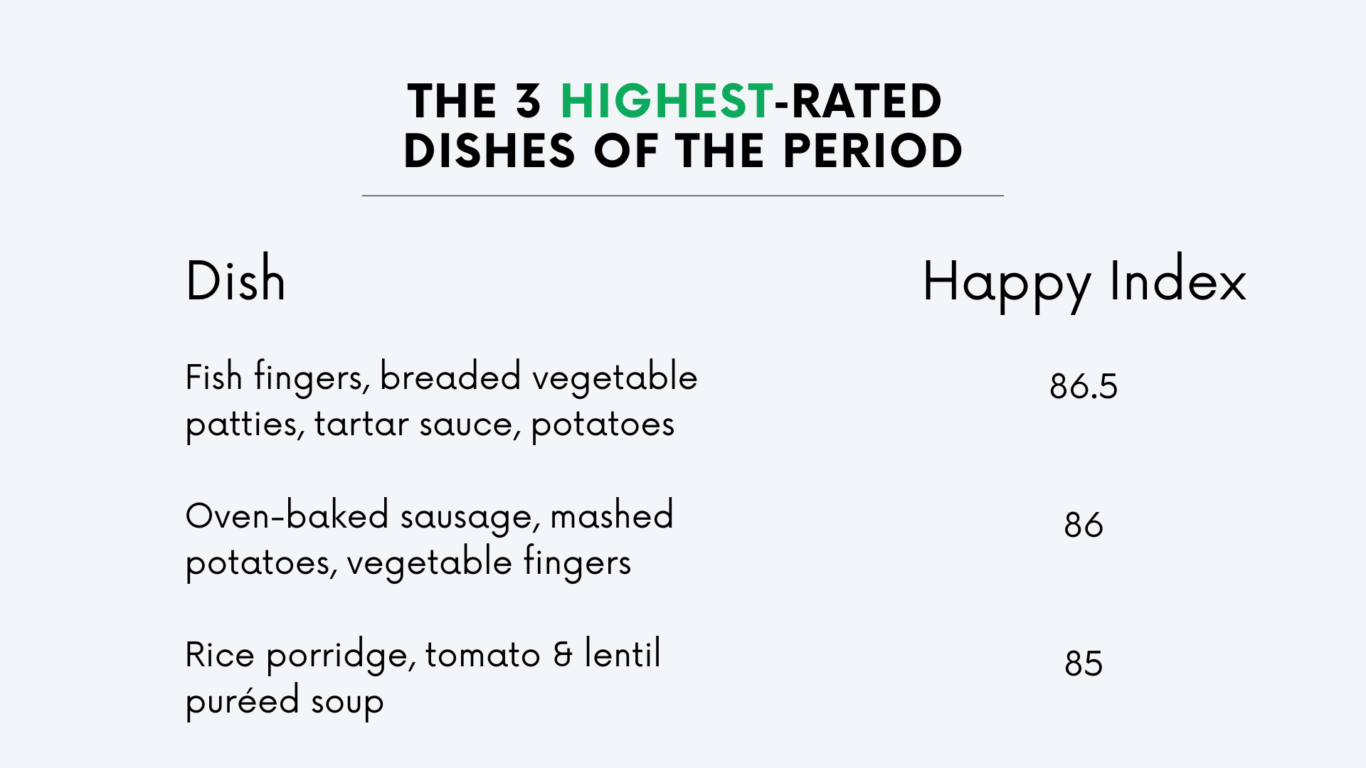
More importantly, the feedback data helped teams identify patterns that had previously been difficult to see. Results could be reviewed by school, day, and meal time — including breakfast, lunch, and afternoon snack periods — helping teams quickly identify where satisfaction was strongest and where improvements were needed.
The feedback also created a shared operational picture between the city and Palmia. Instead of relying on anecdotal comments or isolated complaints, both stakeholders could work from the same real-time student experience data.
The visibility extended beyond internal reporting. Weekly results are displayed on school information monitors and walls, while Järvenpää also shared updates and improvement actions through public news articles. This helped make the feedback loop visible to students and school communities.
Weekly review routines helped teams respond faster
The feedback data quickly became part of the operational routines used by both Palmia and the City of Järvenpää. The regular review cycle helped teams identify emerging issues early while giving staff a structured way to monitor trends across schools.
“We have built a routine for weekly review for each team. It helps us manage both meal satisfaction and overall experience,” says Julia Nenonen, Food Service Manager at Palmia.
The shared visibility also improved collaboration between the city and the service provider. Because both stakeholders worked from the same real-time feedback data, they could align more quickly on priorities, improvement actions, and follow-up.
For Palmia, the data also improved visibility into day-to-day service quality across multiple schools:
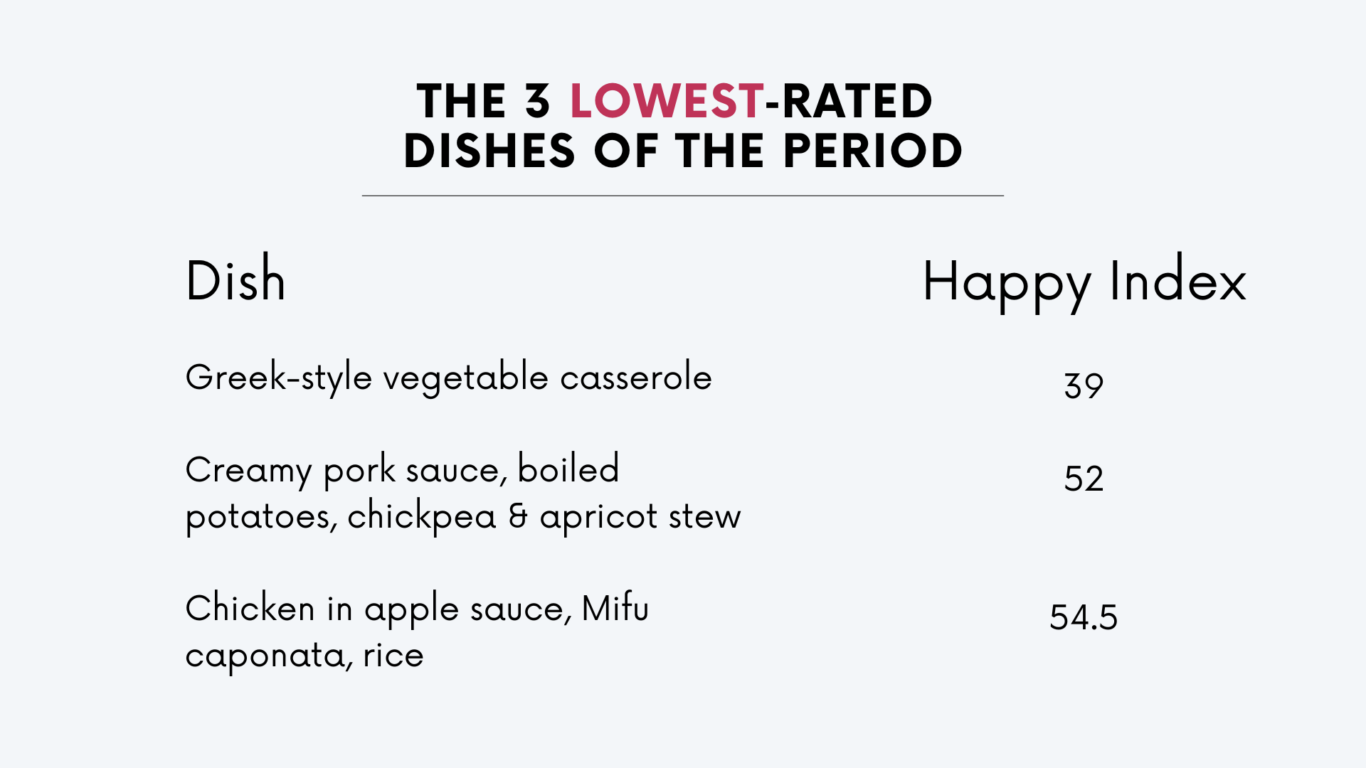
“We use feedback to test, refine, and improve recipes and menu rotations. When something performs well, we can repeat it with confidence. It helps our team learn what students prefer and improve consistency,” says Nenonen.
An example was a blueberry pudding served during Independence Day celebrations. After receiving strong student feedback, the dessert was added permanently to the snack rotation. The visibility and follow-through helped reinforce student trust by showing that feedback was actively reviewed and acted upon.
“Even small changes matter when the students can see their feedback leading into action,” says Pantsar.
Improved consistency, responsiveness, and stakeholder alignment
With over 100 000 student feedback collected during the school year, the city gained continuous visibility into student satisfaction across all locations. Teams could identify performance dips earlier, compare results between schools, and respond more consistently to service quality issues. As a result, there has been over 30% decrease in student dissatisfaction during the current school year.
There is also long-term potential for the feedback program to support higher meal participation and reduced plate waste as meal satisfaction improves over time.
For Palmia, the feedback helps support service-level agreement (SLA) fulfilment by giving teams earlier visibility into issues before they escalate.
“We respond faster and more consistently across locations because we can see satisfaction signals early. The feedback helps us stay on top of service quality and meet SLA expectations across service locations,” says Nenonen.
The shared reporting structure strengthened transparency between the city and Palmia, helping both stakeholders make more informed decisions around menus, service quality, and continuous improvement priorities.
Feedback became a practical management tool for continuous improvement
The City of Järvenpää’s experience shows that real-time student feedback is most valuable when it is easy to give, reviewed consistently, and connected directly to operational decisions.
HappyOrNot fit naturally into the everyday reality of school meal services. Students of all ages could easily provide feedback instantly during meal services, while staff and leadership teams could review satisfaction trends regularly and act quickly when needed.
Real-time microfeedback helped both the city and Palmia improve visibility, align more effectively across stakeholders, and make practical improvements that students could see in their everyday experience.
“We are facing a change where the current contract is ending and a new one with the same vendor is beginning, with new terms and new prices. We want to make sure that the quality of the meals stays on the same or even higher level,” says Pantsar.
About the city of Järvenpää
The City of Järvenpää is located in Uusimaa, Finland, and is the home to 46,000 residents. The city is a vibrant and family-friendly place where services are close by, and children have a strong environment for learning and growth.
Palmia Oy is a food and facilities company that provides food services for the city’s comprehensive schools and early childhood education services.
Learn more about the City of Järvenpää.