Workplace dining experience: how to measure and improve it
For employees who use on-site dining, the staff restaurant is a frequent touchpoint with their employer. This guide explains what workplace dining experience means, why it matters to facilities and workplace teams, and how to measure, improve and prove the quality of your staff restaurant.
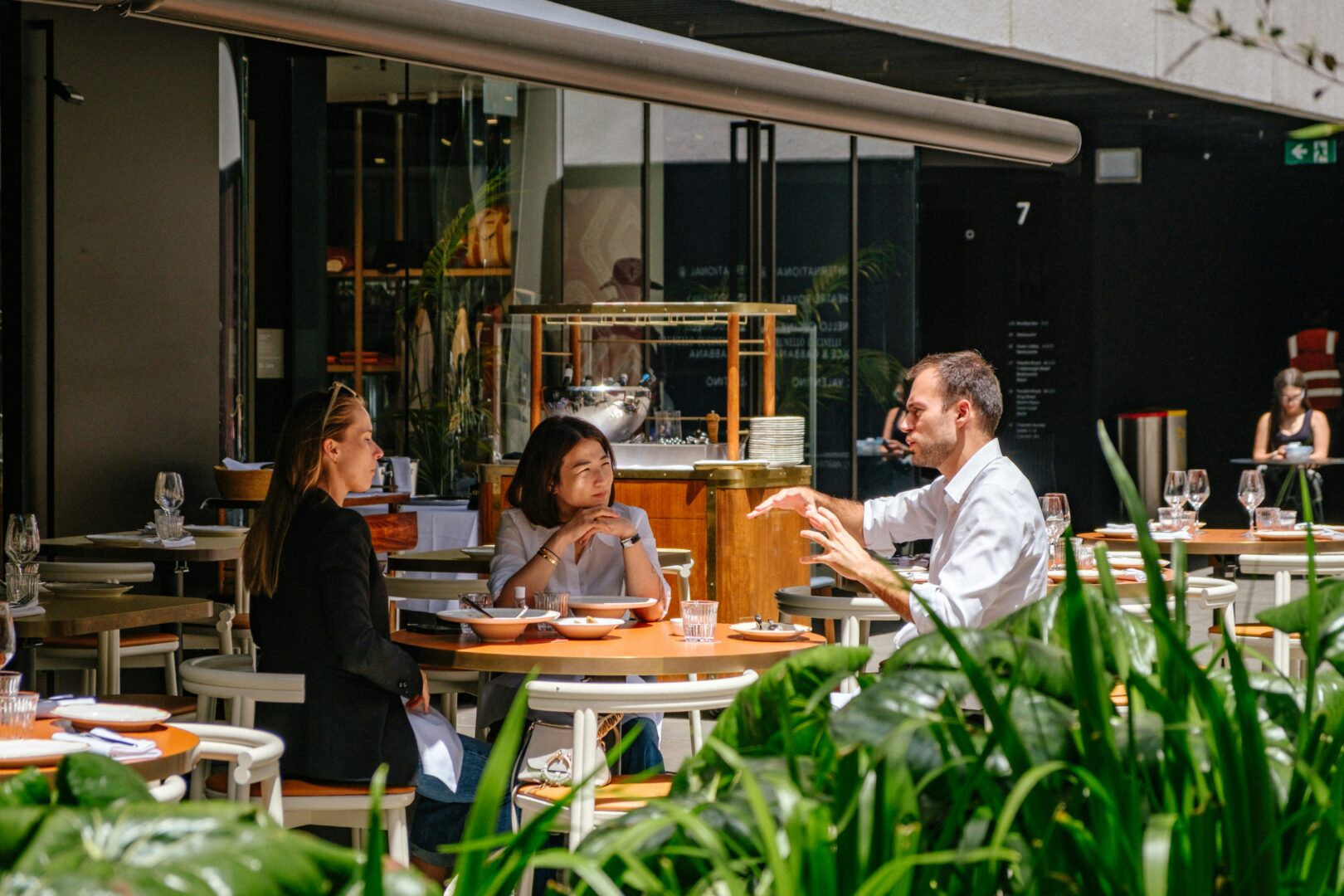
Workplace dining experience is the overall impression employees form of the food and dining provided at work, shaped by the food and menu, queues and speed, staff and service, and the dining environment.
For the facilities, workplace experience and human resources (HR) teams who govern the staff restaurant, food is easy to treat as a line item and harder to treat as a strategy. Yet for the employees who use on-site dining, it is a frequent, recurring, in-person touchpoint. That makes the workplace dining experience a visible reflection of how an organization treats its people, and something facilities and workplace teams can actively manage.
This guide sits at the center of a wider set of resources on workplace dining. It explains what the term means, why it has moved up the agenda, and how to measure, improve and prove the quality of your staff restaurant using our Food Experience operating model. Related guides are linked throughout.
What is workplace dining experience?
Workplace dining experience is how employees perceive the food and dining offered at work, taken as a whole. It is distinct from food service, which is the operational delivery of dining: the menus, kitchens, staffing and contract behind each meal. Food service is what the operator delivers. The dining experience is what employees perceive. We cover that distinction in our guide to food service versus food experience.
Our Food Experience framework groups the dining experience into four dimensions:
- FOOD & MENU. Quality, variety across the week, availability and options for different diets.
- QUEUES & SPEED. How long employees wait at the lunch peak and how much of their break that takes.
- STAFF & SERVICE. The friendliness, helpfulness and efficiency of the catering team.
- Cleanliness, seating, noise and whether the space suits how people actually work, including hybrid and flexible attendance.
Why workplace dining matters now
Two shifts have pushed workplace dining up the corporate agenda: the move to hybrid work, which raises the question of what makes the office worth the commute, and a growing focus on the everyday experience of the workplace.
The research reflects this. Gensler’s Global Workplace Survey 2025 ranks the café, market or food hall first among the amenity spaces employees consider important, beyond individual workspaces and meeting rooms. JLL’s 2025 Workforce Preference Barometer, which surveyed 8,700 office workers in 31 countries, found that almost 40 percent think their office experience could be improved, that food options are among the amenity areas where dissatisfaction exists and that younger workers in particular expect nutritious food and beverage options.
We explore the evidence on dining, well-being and engagement in more depth in how workplace dining experience affects employee engagement.
What a workplace dining experience strategy should include
A workplace dining strategy is less about the menu than about the operating model that keeps the experience improving. Our Food Experience model has four stages:
LISTEN → LEARN → ACT → PROVE
- LISTEN: Continuous feedback. Gather short responses from employees at the point of experience, alongside periodic surveys for depth.
- LEARN: Identify key signals. Bring responses together and find the meaningful patterns, differences and themes that show where attention is needed.
- ACT: Change what matters. Make changes with named owners, from this service to the whole portfolio.
- PROVE: Demonstrate impact. Check whether changes worked and show the result to employees, workplace leaders and the catering partner.
ACTIVATE sits across all four stages rather than being another step. It means embedding feedback into how the restaurant is run and governed: shared KPIs with the catering operator, dashboards, review routines, workflows and incentives. That is where governance belongs, so the model runs as part of everyday operations rather than as a separate project.
How to measure the workplace dining experience
Measuring the experience covers the LISTEN and LEARN stages. Most organizations already track operational basics such as cost, covers and compliance. The gap to close is seeing how the dining experience lands with employees, regularly enough to manage it.
Periodic surveys, including the annual engagement survey, remain useful for depth and for tracking broad sentiment. They are less suited to daily operational visibility. Short, in-the-moment feedback, often called microfeedback, is the complementary layer. It asks for a quick rating where the experience happens, such as when an employee leaves the counter, so the team gets a frequent read on each service. For the full method, see our guide to measuring food experience in a managed dining environment, and for the practicalities in a workplace setting, corporate cafeteria feedback.
A single response does not show that a day, meal or site is underperforming. It is one employee’s view at one moment. The value comes from how responses build up:
Responses → Feedback → Signals → Action → Measured performance
- Responses are the individual submissions, each tied to a time and place.
- Feedback is what you have when many responses are brought together to show what employees are telling you.
- Signals are the meaningful patterns, differences and themes within that feedback, the handful that show where attention is needed.
- Action is what the catering manager, facilities lead or operator changes in response.
- Measured performance is the evidence of whether the change made a difference.
To turn feedback into signals, explore it in four steps: WHAT part of the experience is affected, WHERE it happens, WHEN it happens and WHY it might be happening. A pattern such as lower satisfaction with queues and speed at the Tuesday lunch peak is a signal worth acting on. A single low rating is not.
How to improve the workplace dining experience
Improving the experience is the ACT stage, and it can happen on three timescales:
THIS SERVICE → NEXT SERVICE → ACROSS THE PORTFOLIO
- THIS SERVICE: Respond in the moment. When satisfaction at the servery falls below a configured threshold, an alert can prompt the catering manager to open another till or restock a counter during the same lunch.
- NEXT SERVICE: Improve what happens next. Recurring patterns, such as a popular dish running out on Mondays, lead to changes in prep, menus or staffing.
- ACROSS THE PORTFOLIO: Scale what works. For organizations with several offices, practices that work at one site can be shared with others.
Each change should have a named owner, whether that is the catering manager, the facilities lead or the operator’s account manager, so a signal becomes action rather than a note in a report.
How to prove the workplace dining experience is improving
Proving impact is the PROVE stage, and it is what turns feedback into evidence. It has three parts:
- Check whether each change worked. Compare satisfaction for the relevant service, touchpoint or dimension before and after the change.
- Compare performance fairly. Look at results from SITE to SIMILAR SITES to REGION to PORTFOLIO, so each location is judged against comparable ones.
- Share the result. Show employees what changed because of their feedback, and bring trend-based results to governance meetings with the catering partner. We cover this in our guide to using guest feedback for contract renewals and QBRs.
Explore the workplace dining library
This guide is the starting point. The resources below go deeper into the questions workplace and facilities teams ask most:
- How workplace dining experience affects employee engagement. The evidence linking food at work to wellbeing, belonging and performance.
- Corporate cafeteria feedback: how to measure what your employees really think. Practical methods and tools for the staff restaurant.
- How to measure food experience in a managed dining environment. The measurement method behind it all.
- What is microfeedback? A guide for food service operators. The concept behind in-the-moment dining feedback.
Key takeaway
Treat workplace dining as part of the employee experience, and manage it as an operating model rather than a menu. Listen to employees where they eat, learn from the patterns, act with named owners, and prove the result.
HappyOrNot® helps facilities, workplace and catering teams capture how employees feel about dining at the point of experience, act on it and prove the result. Explore our food service solutions, or read our guide to microfeedback for food service operators. You can also get a quote.