How workplace dining experience affects employee engagement
The idea that a good staff restaurant lifts engagement is easy to assert and harder to prove. This article sets out what research supports on well-being, belonging and shared meals, then draws a careful line to what that means for the teams who run and govern workplace dining.
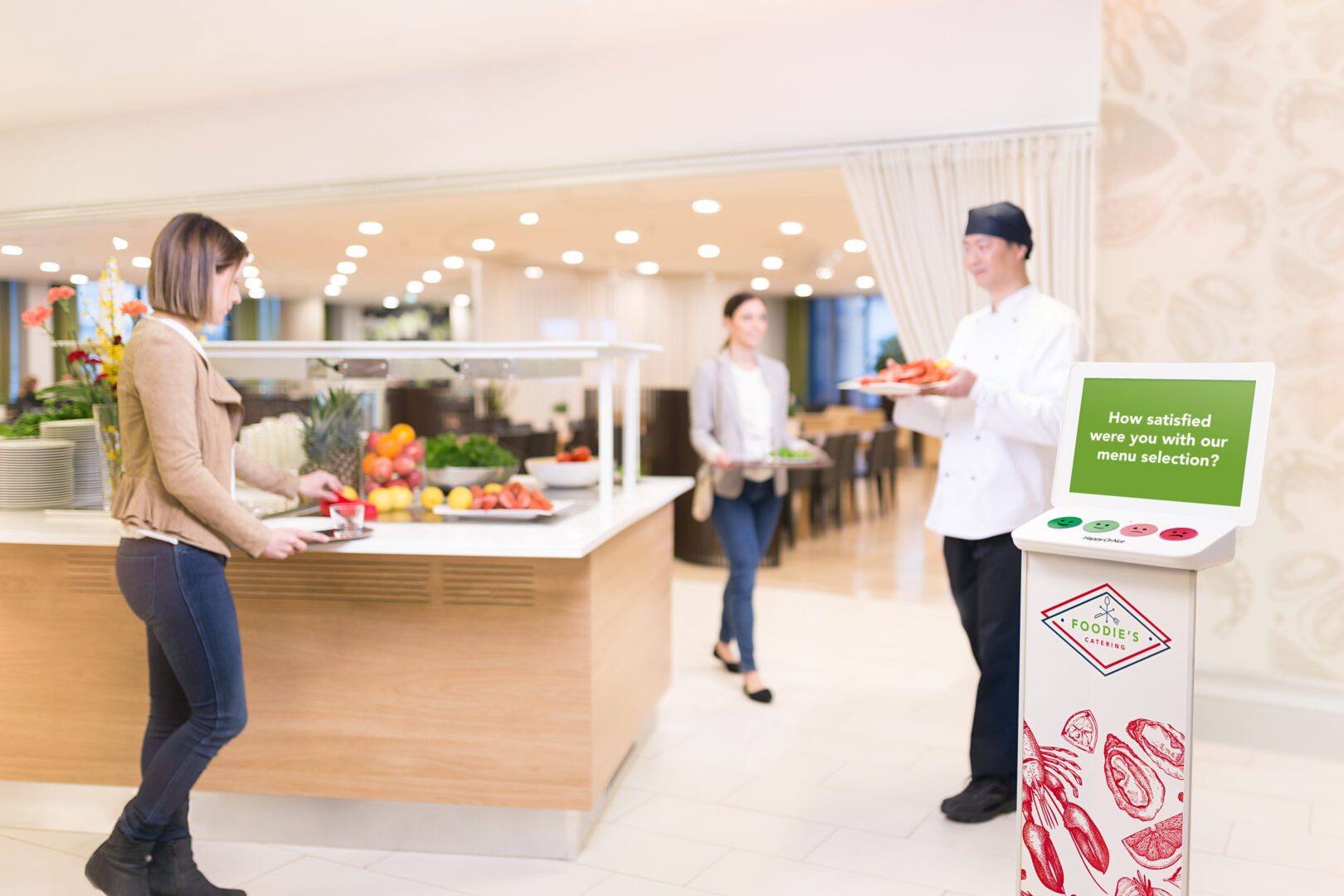
The workplace dining experience influences employee engagement indirectly. It works through well-being, belonging and the social connection that shared meals support, all of which research links to how engaged and productive employees are.
It is tempting to claim that a better cafeteria makes people more engaged. The honest position is more careful. There is strong research linking employee well-being, belonging and shared meals to engagement and performance, and the employee dining experience sits among those factors. The connection is real, but it runs through the experience of being cared for and connected at work, not through the food alone.
This article walks through what the evidence supports, from well-being and belonging to the value of eating together. It then draws a practical line to what it means for the teams who run and govern workplace dining.
Well-being, engagement and performance are closely linked
Start with the part that is well established. Gallup’s research on employee well-being finds that employees who strongly agree their organization cares about their overall well-being are markedly more engaged and more loyal. In its analysis of employee well-being, Gallup reports that these employees are 4.4 times as likely to be engaged at work. They are also 7 times as likely to strongly agree they would recommend their organization as a great place to work, and 53 percent less likely to be watching for or actively seeking a new job.
Notably, only about 21 percent of employees strongly agreed that their organization cares about their well-being, a record-low level Gallup reported in early 2024. That leaves a wide gap for employers to close.
Engagement, in turn, is associated with business outcomes. The 11th edition of Gallup’s Q12 meta-analysis covers 183,806 business and work units. It compares units in the top quartile of engagement with those in the bottom quartile. Top-quartile units show a median 23 percent difference in profitability and a 10 percent difference in customer loyalty, with differences in productivity, absenteeism and turnover as well.
Workplace dining does not appear in those studies by name. What they establish is the chain it can feed into: the everyday experiences that signal an employer cares tend to show up in engagement, and engagement is associated with stronger performance.
Where food fits: belonging and shared meals
Food earns its place in that chain through two well-researched channels: belonging and social connection.
On belonging, research by BetterUp, published in Harvard Business Review, found that a high sense of belonging at work was linked to a 56 percent increase in job performance, a 50 percent drop in turnover risk and a 75 percent reduction in sick days. This is BetterUp’s own research, so it is best read as an association, not proof. Shared spaces where colleagues meet, including dining areas, can be part of how belonging is built day to day.
On shared meals specifically, a peer-reviewed Cornell study of firefighter platoons found an association between eating together more often and higher supervisor ratings of team performance. It was an observational study, so it does not prove that shared meals caused the difference. The lead researcher’s practical takeaway was that employers might view spending on cafeterias as an investment in employee performance rather than a nicety.
Workplace dining is a setting where both of these can happen. A cafeteria is not only a place to be fed. It is one of the few shared spaces where colleagues from different teams can sit together, which is the setting the belonging and shared-meal research points to.
The service-profit chain, applied to workplace dining
A useful piece of management thinking ties this together. The service-profit chain, introduced in Harvard Business Review in 1994, lays out how internal experience flows through to external outcomes. The way employees are treated shapes how they feel, which shapes how they perform, which shapes the experience they deliver.
Read through that lens, workplace dining is part of the internal experience that shapes engagement. The same logic can apply inside the catering operation itself. When the people serving food feel supported and see that their work is valued, they are more likely to deliver a better experience to the diners they serve. Positive feedback plays a role here, which we return to below.
What this looks like in practice
Beyond the academic research, the everyday case is one most people recognize. A good lunch break, in a place worth sitting in, helps people reset and reconnect. Many employees already see it that way.
In ezCater’s fourth annual Lunch Report (2025), an online survey of 1,000 full-time United States employees conducted in June 2025, 94 percent of workers agreed that a lunch break boosts their performance. Yet 51 percent said they skip lunch at least once a week. This is vendor research from a workplace catering company rather than a peer-reviewed study. It is best read as an indication of what employees report, not as proof, but it points the same way as the research above.
The practical takeaway for facilities and workplace teams is that dining is worth treating as part of the employee experience, not a cost to be minimized. Research suggests that well-being, belonging and connection are where engagement is built, and dining can support all three.
How dining feedback fits into the picture
It is worth being precise about what dining feedback measures. In-the-moment feedback from the staff restaurant measures the dining experience, which is one employee-experience touchpoint among many. It is not a measure of employee engagement. What it does is help teams improve one of the everyday experiences that can contribute to well-being, belonging and connection.
Captured as microfeedback at the point of experience, short responses cover the overall dining experience: the food and menu, queues and speed, staff and service, and the environment. Together they build into feedback that catering and workplace teams can review by time and place. Patterns in that feedback become signals that show where attention is needed.
Here is an illustrative example of how this can work. The catering manager and the workplace experience lead both see results from the restaurant exit. Satisfaction dips on Tuesday lunchtimes, and follow-up responses point to the wait at the hot counter. During that service, the catering manager moves a team member to the hot counter. For the next service, the team adjusts prep timing and adds a grab-and-go option at peak. Over the following weeks, they check whether Tuesday lunchtime satisfaction has recovered.
Positive feedback matters too. When employees leave a quick comment about a great meal or a helpful team member, that feedback can be shared with the catering team as recognition.
Key takeaway
The link between workplace dining and employee engagement is real, but it is worth stating precisely. The dining experience does not move engagement on its own. It contributes to the well-being, belonging and connection that research consistently links to engagement and performance. For the teams who run and govern workplace dining, that is reason enough to treat food as part of the employee experience, and to measure how it is landing so it can be improved.
Treat workplace dining as part of the employee experience. HappyOrNot® helps workplace and facilities teams capture how employees feel about dining at the point of experience and act on it. Explore how HappyOrNot supports employee experience, or read our guide to workplace dining experience. You can also get a quote.