What is microfeedback? A guide for food service operators
Microfeedback is a quick, in-the-moment way to gather how guests feel about an experience. This guide explains what it is, how it compares with traditional surveys and how food service operators can use it, day to day, to see and improve the dining experience.
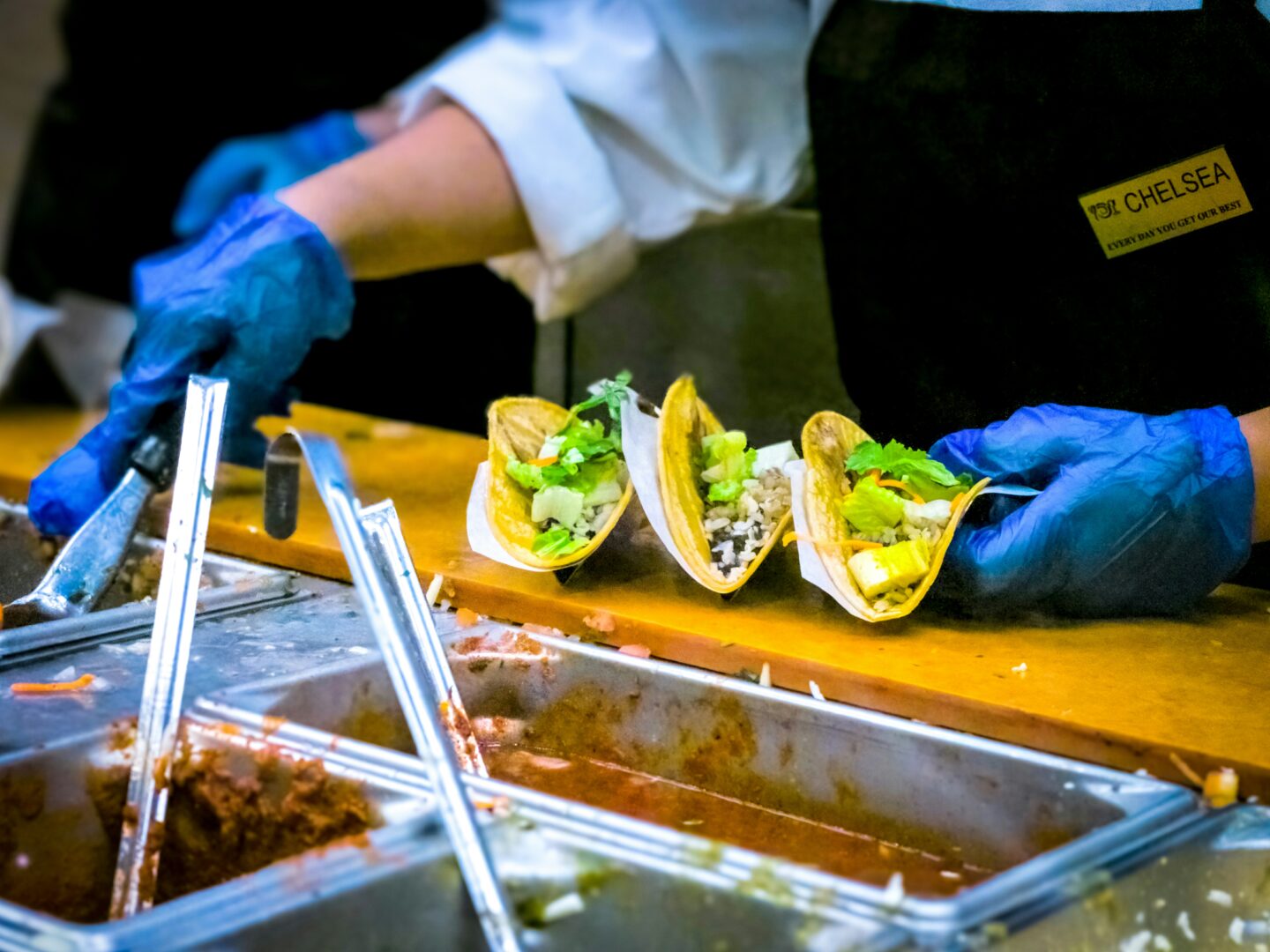
Microfeedback is a short, low-friction way to capture how someone feels about an experience, at or just after the moment it happens. Rather than a long questionnaire sent later, it usually starts with one quick sentiment response, such as a tap on a smiley scale, with the option to add a little more. The point is less to run a detailed study than to give teams a timely read they can act on.
For food service, that quickness is the appeal. Few diners will complete a long survey about their lunch, but many will tap a quick response on the way out. Collected across meals and sites, those responses can build into a timely picture of the dining experience, close enough to the moment to still be accurate.
This guide explains what microfeedback is, how it compares with traditional surveys and where it fits for food service operators. For the wider concept beyond dining, our microfeedback pillar page goes into more depth; here the focus is on how it works in a managed dining setting.
What is microfeedback?
In practice, microfeedback works by keeping the ask as small as possible and placing it right where the experience happens. In a dining context, that often means a four-button smiley scale, from very happy to very unhappy, that a guest taps as they leave, typically with the option to add a comment or answer a short follow-up.
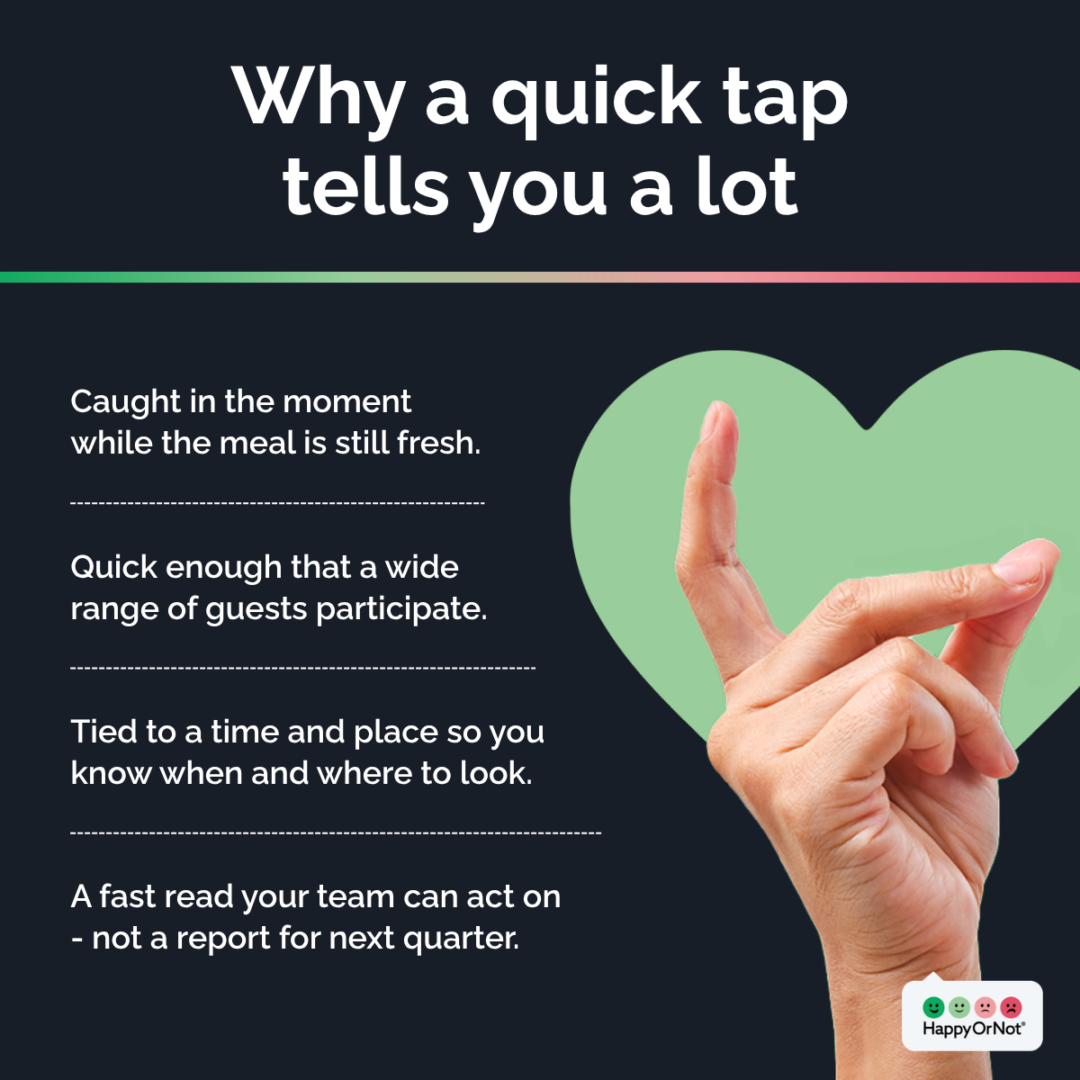
The idea is deliberately operational. Microfeedback is less about detailed research and more about giving teams a timely read they can act on. It tends to favor three things longer surveys handle differently: speed, since a response takes seconds; reach, since it is easy enough that a broad range of guests will take part; and context, since each response can be tied to a time and place. HappyOrNot built its approach around this, using a quick four-button scale as the starting point.
Microfeedback vs traditional surveys
Both have a place, and they tend to do different jobs. Surveys are built for depth and periodic analysis; microfeedback is built for speed and day-to-day operations. The contrast is clearest side by side.
| Feature / dimension | Traditional surveys | Microfeedback |
| Length | 10 to 20+ questions | A quick sentiment question, with optional follow-up |
| Timing | Hours or days after the meal | At or just after the moment of experience |
| Typical response rate | Often lower; email rates near 10 to 15% | Often higher, as responding takes seconds |
| Recall accuracy | Can fade before it is answered | Captured while it is fresh |
| Who tends to respond | Can skew to the most and least satisfied | A broader range of guests, depending on placement |
| Best suited to | Deeper, periodic analysis | Frequent, operational reading |
| Speed to insight | Weeks | Same day, where teams are set up to act |
The response-rate gap is one reason operators add microfeedback. Email survey response rates have fallen from around 20 to 25 percent in 2019 to 10 to 15 percent in 2025, according to the customer research firm User Intuition. Because microfeedback asks so little of the guest, it can reach people who would never open a survey, though how many respond still depends on footfall and how well the touchpoint is placed.
Why microfeedback works well in food service
Dining is fast, high-volume and repetitive, which suits an in-the-moment method.
- It captures the moment. A guest’s impression is sharpest as they finish, so feedback given then tends to be more accurate than a survey recalled the next day.
- It can build useful volume. Busy sites can generate enough responses to reveal patterns, which makes trends easier to spot, though volume varies with footfall and placement and does not on its own make a sample representative.
- It broadens who takes part. Because it is quick and anonymous, it invites responses from guests who would not fill in a form, giving a wider view than surveys alone, even if it does not capture every guest.
- It ties to time and place. Each response can be tagged by site, area and hour, so a dip points toward the meal, shift or location worth a closer look.
- It supports quick action. Because the signal arrives fast, teams that are set up to respond can address issues while they still matter.
Does microfeedback replace surveys?
No, and it is not meant to. Microfeedback complements longer, periodic surveys rather than replacing feedback altogether. It works as the frequent, day-to-day layer that shows what is happening now and where to look; periodic surveys remain valuable for depth, for understanding the reasons behind a trend or for periodic deeper research.
It also helps to be clear about what each does. Microfeedback is good at flagging an operational hotspot, such as a lunchtime dip at one site. Understanding the cause, whether it is staffing, menu or layout, often takes a closer look, sometimes through a follow-up comment and sometimes through a deeper survey or conversation. In practice, an operator might rely on microfeedback to inform day-to-day operational decisions and reach for a periodic survey when planning next term’s menu. See how to measure food experience for how the two fit together.
Bring real-time guest feedback to your dining sites
See how HappyOrNot helps food service operators capture how guests feel at the point of service and act on it across every site. Explore our food service solutions.