Categories: Bring structure to your open feedback
HappyOrNot Categories uses AI to classify open feedback, helping operational teams filter customer comments, reduce noise and quickly find the feedback most relevant to what they need to investigate.
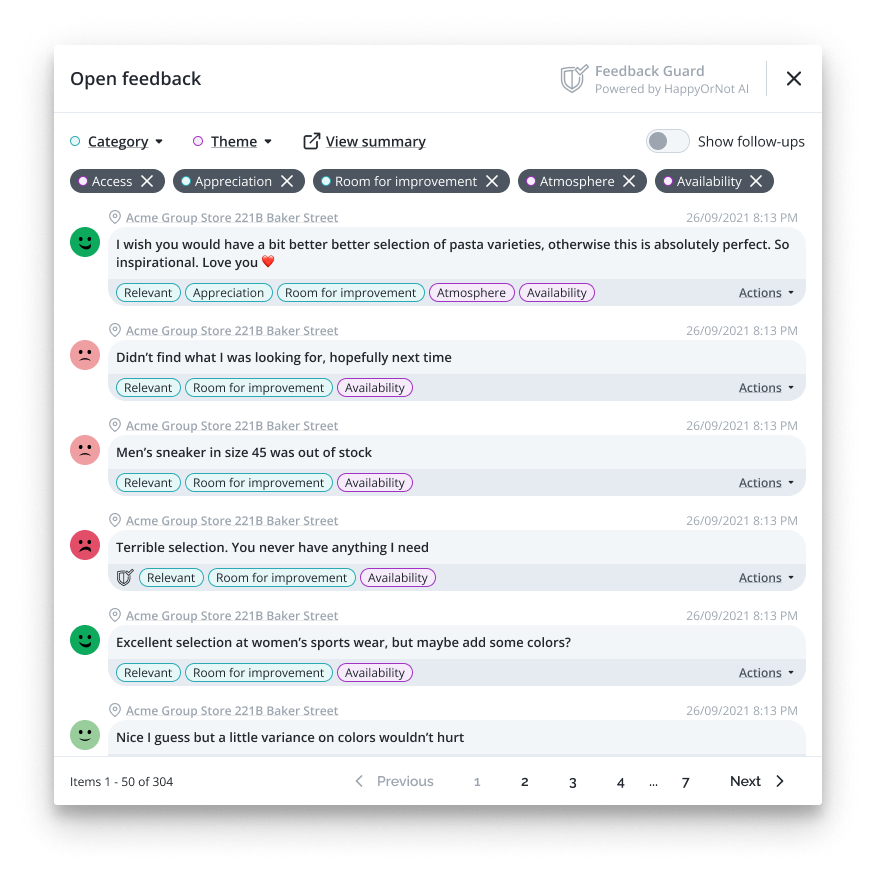
Open feedback gives customers the freedom to say what they want, in their own words. That is what makes it valuable, but it also means not every comment serves the same purpose.
Some customers highlight an opportunity for improvement. Others recognize a great experience or mention an individual employee. Some feedback may need urgent attention, while other comments may simply be spam.
When those different types of feedback arrive together, finding the comments relevant to what you need to understand can take time. That is the purpose of Categories, using HappyOrNot AI to automatically classify open feedback and make relevant customer comments easier to find and filter.
Bring structure to open feedback
Open comments are naturally unstructured. Customers decide what to write, how much to say and what aspect of their experience they want to highlight. For operational teams, that creates a simple challenge: how do you quickly find the feedback that matters to the task at hand?
Categories brings structure to customer feedback analysis by automatically classifying open comments according to the type of feedback they contain. Instead of manually working through individual responses to determine which are relevant, teams can filter comments by Category and focus on the feedback they want to investigate.
Find the right feedback for the job
Different comments can be useful for different reasons. Categories currently organizes open feedback into:
- Relevant: Feedback considered relevant for analysis.
- Appreciation: Comments recognizing something positive about the experience.
- Personal feedback: Feedback relating to an identifiable person.
- Room for improvement: Comments identifying potential areas for improvement.
- Urgent: Feedback classified as requiring more immediate attention.
- Spam: Comments identified as spam.
- Harmful: Feedback classified as harmful.
This means teams can focus on a particular type of feedback without manually sorting through everything else first. For example, a manager looking for improvement opportunities can focus on Room for improvement. A team looking to recognize positive experiences can explore Appreciation. And Urgent provides a way to isolate comments that may warrant a closer look.
Reduce the noise around customer feedback
High volumes of open feedback can make it difficult to identify what is relevant, particularly when useful comments sit alongside spam or other material that does not contribute to the analysis.
Categories helps reduce that noise by automatically classifying comments, HappyOrNot AI makes it easier for teams to separate useful feedback from comments they may not need for a particular investigation. That means less time manually sorting customer feedback and a clearer starting point for analysis.
Categories and Themes: two different ways to focus
Categories and Themes both bring structure to open feedback, but they answer different questions.
Themes help you understand what customers are talking about. They group feedback by recurring topics and sub-topics, such as speed, friendliness or cleanliness.
Categories help you understand what kind of feedback it is. They classify comments as Relevant, Appreciation, Personal feedback, Room for improvement, Urgent, Spam or Harmful.
A customer comment can have both a Theme and a Category. For example, a comment about an unclean restroom could have a Cleanliness Theme and a Room for improvement Category. Together, these different layers make it easier to focus customer feedback analysis on the comments relevant to your question.
Insights and Open Feedback Summary
Categories is not another analysis experience teams need to navigate separately. It is a way to focus the feedback being analyzed.
Within Insights, Categories can help narrow the feedback used when exploring the monthly performance story, while within Open Feedback Summary, teams can use Categories to focus the comments they want AI to summarize, alongside other selections such as timeframe, day, demographic or Theme.
This gives operational teams more control over the feedback they investigate while keeping Categories connected to the wider HappyOrNot Analytics experience.
Spend less time sorting and more time understanding
The value of open feedback comes from what customers choose to tell you. However, when managers have to manually sort, classify and review large volumes of comments before they can begin understanding them, some of that value becomes harder to access.
Categories removes part of that manual work by using AI to classify open feedback automatically, HappyOrNot makes it easier to filter comments, reduce noise and find the customer feedback relevant to the question at hand.
To see our full suite of AI-powered feedback capabilities, visit our page AI Feedback Analytics