How Unison Retail Management improves airport experience before complaints pile up
How do you improve airport concessions before complaints reach leadership? Unison Retail Management uses HappyOrNot’s real-time microfeedback across 180+ concessions to spot issues early, celebrate outstanding service, and turn passenger insights into fast operational improvements that enhance the airport experience.
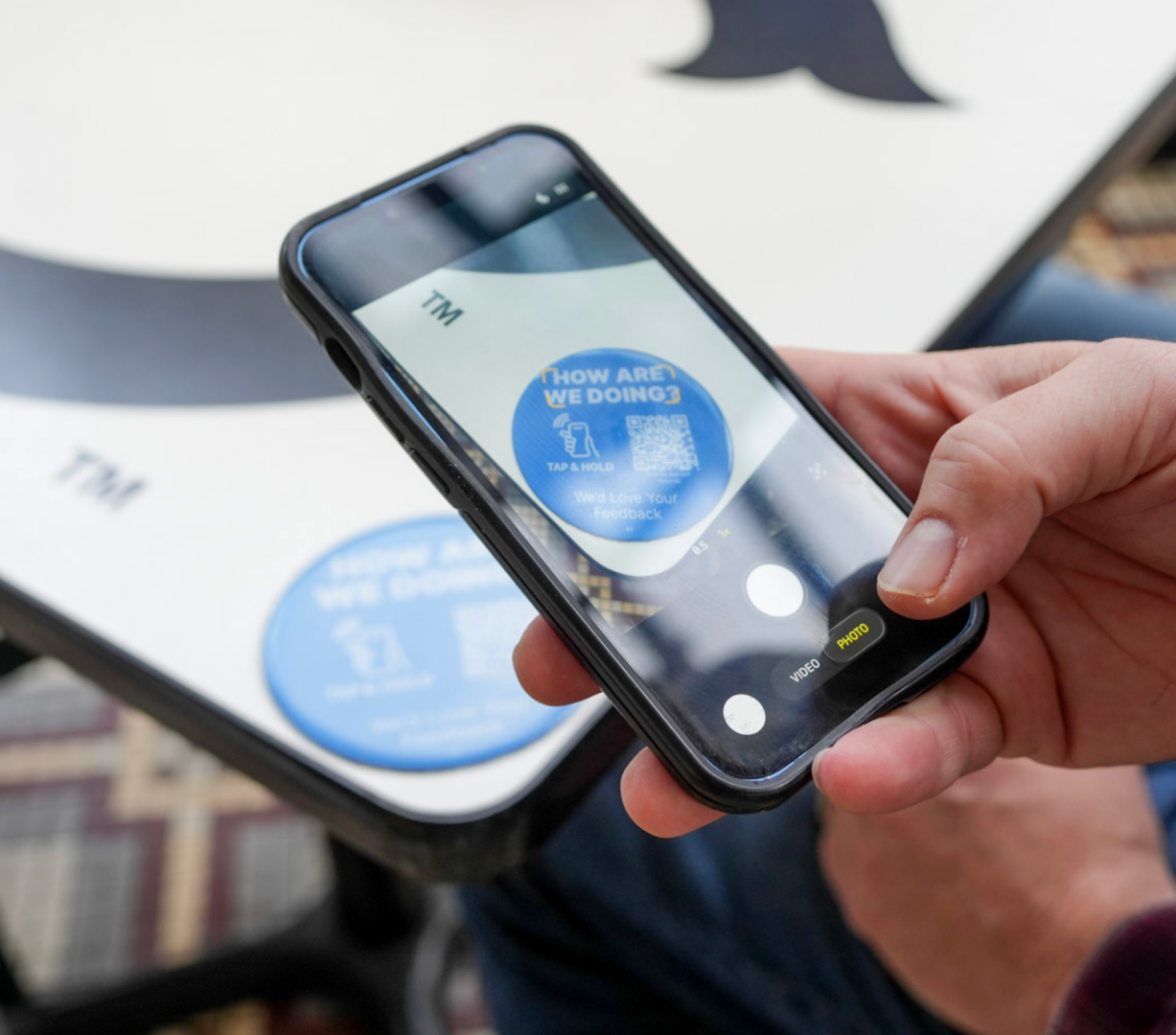
In a recent conversation with our team, Unison Retail Management shared how they use HappyOrNot to turn passenger feedback into operational action across an airport concessions program.
The discussion centered on one idea anyone managing a complex, multitenant operation will recognize: By the time complaints reach leadership through formal channels, the moment to fix the experience is usually gone. The job is to get the signal earlier, route it to the right person, and act before it becomes a problem, which is exactly what real-time feedback, captured as microfeedback at the point of experience, is built to do.
Here is how the Unison team turned that idea into a working system across 180-plus concessions, multiple brands, and a passenger flow that never stops.
Why airport concessions need a faster signal than surveys can give
Unison Retail Management oversees concession program operations on behalf of airport authorities, including its long-running role as the Concessions Management Representative for the City of Chicago’s Department of Aviation. That means coordinating across dozens of brands, hundreds of locations, and a passenger base that turns over every few hours. Each concessionaire has its own management, training, and standards. The airport authority sits above all of it, accountable for the overall passenger experience.
In an environment like that, the traditional toolkit (mystery shopping visits, quarterly surveys, complaint logs) produces information that is detailed but late. By the time a report lands, the queue that frustrated passengers last week is already history, and the staff who created a great experience never hear about it. Leadership ends up reacting to whichever issue escalated loudest, not to the patterns that shape passenger sentiment.
The Unison team wanted something different: A way to see the experience as it happened, location by location, in volumes high enough to spot trends rather than anecdotes.
How real-time microfeedback runs across 180+ concessions
The program is built around Smiley Sign™: Quick response (QR)-based feedback points deployed across more than 180 concessions. Passengers scan a code at the moment of exit, share a quick sentiment tap, and optionally leave a short comment. The whole interaction takes seconds, requires no app download and is anonymous by design.
On the back end, the data flows into a reporting structure designed for a multitenant operation:
- Airport leadership sees consistent oversight across all operators: The same metrics, the same locations, the same time periods.
- Unison management gets centralized visibility across the program, with the ability to compare locations, brands and shifts.
- Tenant leadership sees their own performance data and shares it with frontline managers, turning a corporate metric into a shift-level conversation.
Centralized visibility, decentralized action. As the Unison team put it: “What happens now, you can see it … bad interaction or good interaction, you can see it at the moment.”
The numbers behind the program
A few figures from the first six to seven months tell the story:
- Over 23,000 pieces of passenger feedback captured across the concessions program.
- Around 22% of the feedback givers leave a written comment alongside their sentiment tap, which is far higher than typical email-survey verbatim response rates.
- 180+ concessions covered, spanning multiple brands and food, beverage and retail categories.
Volume matters more than it might first appear. Microfeedback at the point of exit is high enough in a continuous, always-on signal to detect patterns by location and time, and broad enough to include the passengers who would never bother to fill in a survey, not only the most motivated complainers.
Turning signals into operational action
High volume only matters if the data triggers decisions. The Unison program is structured so signals move into action quickly at every level.
At the concession level, operators can act in days rather than quarters. One example from the conversation: When feedback flagged a comfort issue at a particular location, the operator added seating within days. This is the kind of small, fast adjustment that becomes possible when the data is fresh, and the owner is named.
At the program level, the value shifts to oversight. When four locations of the same brand are scoring well, and a fifth is not, leadership has a starting point (staffing, training, product mix, layout) rather than a generalized assumption. As the team noted, “Leadership can really dive into that particular location,” and that diagnostic specificity is what turns feedback into improvement instead of a report.
At the airport authority level, the same data supports performance management across operators. Every concessionaire is measured against the same yardstick, by the same method, in the same locations; consistency that is hard to manufacture with mystery shopping or self-reported metrics, and exactly what a public-facing operator needs to demonstrate accountability.
What surprised the team: how much of the feedback is positive
One of the strongest themes in the conversation was unexpected. The team had set up the system expecting to use it mainly to catch problems. What they found was that a large share of the feedback was positive, and that passengers were going out of their way to name individual employees who had delivered great service.
“We were able to identify locations performing very well, people praising employees and naming them,” the team shared. Positive feedback now feeds into employee recognition programs, reinforces a stronger service culture across the airport and gives concession leaders something concrete to celebrate at shift briefings.
This balanced view (issues and excellence captured by the same system) is one of the underappreciated benefits of microfeedback. Traditional complaint channels are, by design, weighted toward what went wrong. A continuous, anonymous, low-friction channel captures the full picture, including the moments operators are getting right and should be doing more of.
Why frictionless feedback produces more honest insight
The mechanics of collection shape what gets said. The Unison team described the Smiley sign approach as “a tool that provides no pressure … you just happen to see that and share your experience.” That low-pressure, opt-in design is doing more than improving response rates; it is changing the kind of feedback the program receives.
- No staff handing out surveys, so passengers do not feel watched while they respond.
- No login, no email address, no follow-up, so passengers are not worried about how their feedback will be used.
- No multiquestion form, so the people who normally would not respond at all leave a tap and move on.
The result is feedback that is more representative and more candid; high volume, low friction and tied to a specific time and location. That is the gap microfeedback fills between mystery shopping (detailed but slow and low-volume) and surveys (structured but skewed toward extremes).
What the Unison team learned
For airport concessions programs, or any complex, multitenant environment, considering a similar approach, a few practical lessons stood out:
- Treat feedback as an operational tool, not a reporting tool. A monthly summary is a record. A daily signal is a decision. The shift from one to the other is where most of the value lives.
- Make the data available at every level. When airport leadership, the management organization and individual tenants all see the same numbers, alignment is automatic. Nobody has to spend the first half of a meeting agreeing on what the data says.
- Design for participation, not for completeness. A short, anonymous, frictionless touchpoint will produce ten or twenty times more responses than a perfect survey. The trade-off is worth it.
- Use the positive signals too. Passenger praise, especially when it names specific employees, is one of the most underused tools in concessions management. Build it into recognition programs from the start.
- Close the loop. When operators see issues addressed and great service celebrated, they keep paying attention to the data. Asking without acting erodes trust on both sides of the counter.
Why it matters in the terminal
Airports are unforgiving environments. Passengers are tired, time-pressured and unlikely to come back specifically to complain about a slow coffee or a cluttered shop. They will, however, complain to their families, on travel review sites and on social media, none of which gives the operator a chance to fix the issue while there is still time.
A continuous, anonymous, location-specific microfeedback signal closes that gap. It is the same operational logic we have seen at Dublin and Cork airports with daa and, on the employee side, at Nature’s Way Foods. Capture the signal where it happens, route it to the person who can act and make the loop short enough that improvement becomes a habit instead of a project.
Learn more about our feedback solutions for service environments.