Guest Experience Happens in the Moment. Your Feedback Should Too
When feedback arrives days after a stay, the moment it describes is already gone. In a recent LinkedIn Live, Kalahari Resorts’ Dustin Sanders explained how capturing guest sentiment at the point of experience helps hospitality teams see what’s happening, act faster and recognize the people getting it right. This article draws out the practical lessons.
A guest’s impression of a resort forms in dozens of small moments—the spa treatment, the wait at the bar, the check-in, the water park)—and most of those moments are over long before a post-stay survey ever lands. That gap, between when an experience happens and when the feedback about it arrives, is the problem in-the-moment feedback is built to close.
In a recent HappyOrNot LinkedIn Live, Jamie Lundy, Customer Enablement and Training Manager at HappyOrNot, sat down with Dustin Sanders, Corporate Director of Guest Experience at Kalahari Resorts & Conventions, to talk about exactly that: How bringing feedback closer to the moment changes what hospitality teams can see and do. Kalahari is not a small operation: It’s been around for 26 years, with resorts in Wisconsin Dells, Wisconsin; Sandusky, Ohio; Round Rock, Texas; the Pocono Mountains in Pennsylvania; and a new property opening in Virginia. What follows are the practical lessons from that conversation.
A great experience is really many experiences
Kalahari’s brand promise is to lead with love and go a little beyond what the guest expects. Not grand gestures, but a consistent sense that the visit was, as Sanders put it, always a little better than they thought it would be. The challenge is that a resort delivers that promise across many moving parts at once (spa, water park, go-karts, dining, check-in), each run by a different team.
That is the hospitality consistency problem in a sentence. The guest experiences one visit while the operator experiences a dozen separate operations that all have to land. To keep that consistent, you need to know how each of those moments is going: Not in aggregate, months later, but close to where and when it happens. That is where feedback captured at the point of experience earns its place.
Bringing feedback closer to the moment
Before HappyOrNot, Kalahari’s spas relied on a standard post-stay. It was generic, easy to ignore, and so a busy month might yield around 16 responses, often with little constructive detail. It also reached only hotel guests, missing the local clientele and seasonal pass holders who are central to a spa’s business.
Replacing that with feedback captured in the moment changed the picture. Kalahari now gathers 200 or more responses per spa, using Smiley Touch Table and Stand devices at the point of experience across four spas. This is the essence of microfeedback: Short, real-time feedback captured at or immediately after a specific experience, designed to produce signals a team can act on.
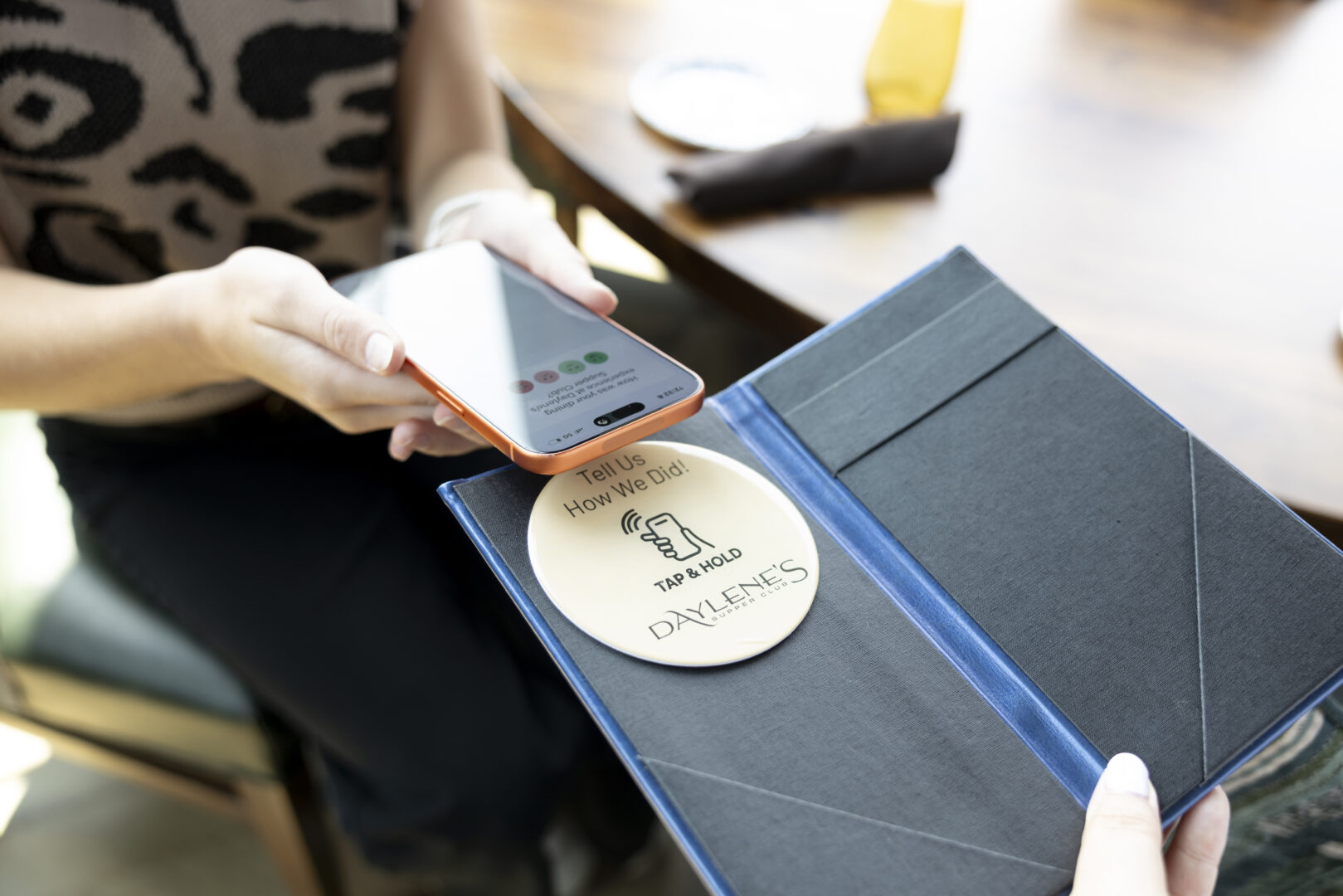
At Darlene’s, a new supper club within the wider organization, the team took a different route to the same idea. They used HappyOrNot’s Smiley Sign: Near-field communications (NFC)-enabled “tap-and-go dots”, customized to their design and tucked inside the bill presenter. In its highest week, that one touchpoint gathered around 230 responses, and Sanders was clear about why the format matters: “
The extreme brevity of the survey really leads guests to finish it and then also leave constructive feedback.”
The brevity is the point. Survey fatigue is real, and a long form at the end of a good meal is an easy thing to abandon. A single, low-friction question a guest can answer in seconds gets finished; that, in Kalahari’s experience, still invites a comment. Of those 200+ responses, about 160 included written comments. Participation at the spas ranges from 30 to 40 percent, well above the 20 percent threshold that would already be considered strong in a traditional survey.
Feedback as recognition, not just correction
One of the strongest themes in the conversation was that feedback does not have to be a stick. At Kalahari, positive feedback is treated as a tool in its own right. When a guest leaves a happy response at the spa, they are asked whether there is an associate they’d like to shout out, and the shout-outs pour in. Named team members earn “Bennie Bucks,” redeemable for lunch, a gift card, or other rewards, and they look forward to seeing their names come up.
At Darlene’s, guests name staff unprompted, such as “Alex is great” or “The hostess is great,” and a tally board in the back tracks mentions throughout the month. It has become a genuine source of pride for a new team taking on the daunting task of opening a supper club in a region where some have run for half a century. This is recognition and coaching, not just correction. It uses in-the-moment feedback to reinforce the behaviors worth repeating, which is often a faster route to a consistent experience than only ever fixing what went wrong. For frontline teams, seeing their own names in real guest comments is a far more motivating performance metric than a monthly average.
Making feedback useful for frontline teams and operators
A recurring risk with any feedback program is that it becomes another report nobody reads. Kalahari’s approach keeps the signal close to the people who can use it. Alerts go to the spa directors who own the recovery. Recognition data goes to the teams and the tally board. Comments are summarized: Sanders points to using AI to distill the feedback, so the themes are usable rather than buried in raw responses. HappyOrNot’s Open Feedback AI is built for exactly that: Turning volumes of comments into clear themes.
The principle underneath it is simple: Give each signal a job and route it to the person who can act on it. A regional leader looking for consistency across properties, a spa director managing today’s recovery, and a chef protecting a signature dish all need different cuts of the same feedback. Delivered that way, feedback becomes part of the operational workflow instead of a separate reporting exercise.
The takeaway: Don’t sit on what your guests tell you
Asked for advice to other operators, Sanders kept it plain: The answers are already there if you ask the right questions and genuinely listen. The failure mode is not collecting too little data; it is collecting data and doing nothing with it. That does not mean acting on every request. As Sanders joked, plenty of guests would love the water park open 24 hours, and that is never going to happen. It means reading the feedback honestly, separating what to fix now from what to plan for later, and treating the signal as a starting point for judgement rather than an instruction. The operators who thrive, in his view, are the ones who listen and act. The ones who sat on the sidelines and ignored what their guests were telling them, he noted, are largely the ones no longer around.
For hospitality teams, the lesson from Kalahari is not about a device or a score. It is about closing the gap between when an experience happens and when someone can do something about it. Guest experience happens in the moment, and the feedback that improves it works best when it does too.
Bring guest feedback closer to the moment
HappyOrNot helps hospitality teams capture how guests feel at the point of experience and turn it into action, recognition and more consistent visits. Explore how HappyOrNot works for hospitality, or read our guide to microfeedback.