Customer feedback strategies that drive real results
Discover the customer feedback strategies that help teams act faster and improve experiences in real time. Learn how microfeedback and real-time signals replace slow surveys with actionable insight that drives measurable operational impact.
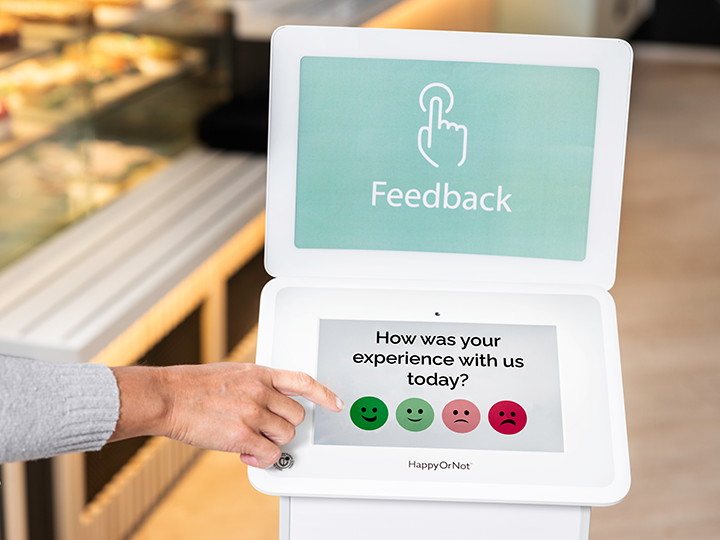
Most teams do not have a feedback problem. They have a speed-to-action problem. If feedback arrives days or weeks after the experience, it becomes commentary, not a tool for running today’s operation. Many delayed survey channels also struggle with participation. For example, Pew Research Center reported telephone survey response rates falling to 6% in 2018, underscoring how difficult it can be to rely on slower, opt-in feedback methods alone.
The strongest customer feedback strategies are built around real-time customer feedback and microfeedback: Short, in-the-moment signals that reach the people who can fix the customer experience while it still matters.
Why traditional feedback methods fall short
Traditional survey methods, such as mystery shopping, phone calling, comment boxes, or digital-only, can still be useful for long-term trend analysis, deeper diagnostic questions and periodic benchmarking. But they are often less effective as the only operational feedback system:
- They arrive too late to be acted on. By the time a weekly, monthly or quarterly readout is reviewed, the moment is gone and the team has already moved on to new issues.
- They mostly reach people you already have contact details for. Email and SMS surveys rely on first-party data, which skews responses toward known customers and can miss walkaways and non-buyers.
- They depend on memory, not the moment. The longer the delay, the more recall and mood shape the response instead of the actual experience.
- They create survey fatigue. Long forms and repeated asks lower engagement, especially when the outcome is unclear to the person providing feedback.
When the goal is customer experience improvement, the feedback method has to match operational cadence. That means faster capture, faster visibility and clearer ownership.
Customer feedback strategies built for speed and action
Below are 8 customer feedback strategies that work best when the goal is improving the customer experience in the flow of daily operations, not just reporting.
1) Collect feedback at the point of experience
If you want action, collect signals where the experience happens: At the exit, service counter, check-in, queue or right after a digital step.
The best way to get customer feedback is often the least disruptive one: A single tap that takes seconds and does not ask customers to relive the experience later.
2) Start with a tiny ask, then offer optional detail
High-quality customer feedback tools reduce friction. Use an instant signal first, then provide an optional follow-up for those who want to add context.
A practical pattern:
- One-tap sentiment signal
- One short follow-up question (optional)
- One open comment (optional)
This keeps response rates high while still capturing the “why” when it matters.
3) Hear from both buyers and walkaways
Feedback from clients who completed a transaction is only part of the story. Many of the most valuable patterns come from people who did not buy, did not finish, or left without resolving their issue.
To capture this, place feedback where both outcomes pass: Exits, lobbies, waiting areas or digital drop-off points. When walkaways are included, you stop guessing why revenue or satisfaction dipped.
4) Use a collection fabric, not a single channel
A single method rarely covers the whole experience. The strongest strategies for customer feedback combine multiple collection points so each environment has the right tool.
A practical “collection fabric” often includes:
- In-location devices for fast volume
- Signage-based capture in physical environments for convenience and discretion
- Digital capture in digital environments for key online moments
This approach reduces blind spots and creates a more reliable operational pulse.
5) Route feedback to the person who owns the fix
Feedback only becomes actionable when it reaches an owner quickly. Build your customer feedback strategy so signals land with the right person by location, time window and issue type.
Day-to-day customer experience improves when feedback is routed to the right owner quickly:
- A manager owns each location’s signal
- Alerts go to the owner when the signal drops
- Escalation rules are defined when patterns persist
6) Review feedback on a daily cadence, not a monthly cycle
Make feedback part of the operating rhythm:
- Quick daily scan for dips, spikes and repeat issues
- Weekly review for recurring patterns and resourcing decisions
- Monthly roll-up for leadership visibility and prioritization
This is how you gather customer feedback and turn it into action without adding meetings that no one has time for.
7) Close the loop visibly, where the experience happens
A customer feedback program becomes real when people can see what changed.
Close the loop with short, visible updates:
- “You said the wait was too long. We added coverage from 12–2.”
- “You said signage was unclear. We updated the wayfinding.”
This earns trust, increases participation and reinforces the behaviors you want repeated.
8) Turn positive feedback into recognition
Customer feedback improvement strategies often focus only on problems. That leaves teams feeling monitored instead of supported.
Make recognition part of the system:
- Share great comments with the teams who earned them
- Celebrate improvements, not just top scores
- Highlight “most improved” so progress is rewarded, not just perfection
This drives adoption and makes the feedback loop sustainable.
Customer feedback methods that work in real operations
Different environments need different customer feedback methods. Use what fits the flow:
- High-traffic, low-time environments: One-tap microfeedback at exits or service points.
- Moments where context matters: Optional follow-ups and comments, placed where customers can pause without friction.
- Digital journeys: Lightweight intercepts at key steps, not long email forms days later.
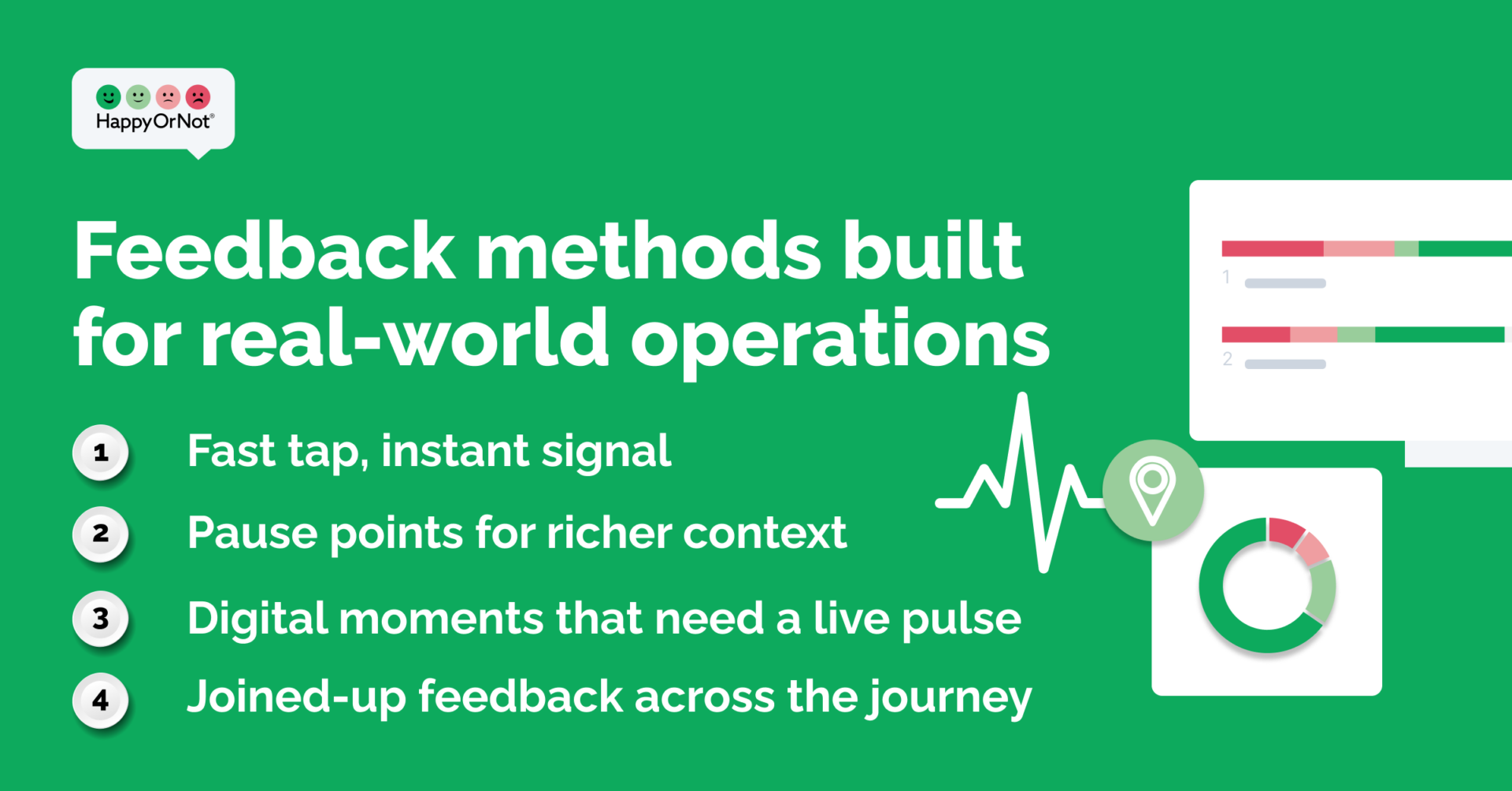
- Complex experiences: Combine signals across touchpoints so patterns are visible by stage and location.
If you are choosing methods of collecting customer feedback, prioritize speed, clarity and ownership over question depth.
How to measure whether your feedback strategy works
A feedback strategy should be judged by how quickly it produces better outcomes, not by how many dashboards it fills. Track these operational indicators alongside experience signals:
- Time-to-visibility (how fast teams see the signal)
- Time-to-action (how fast a fix is made)
- Repeat-issue rate (whether the same problem returns)
- Participation volume by location and time window
- Trend lift after a change (before/after validation)
For executive reporting, connect operational fixes to business outcomes like retention, conversion and reduced complaints.
Common mistakes to avoid
- Collecting feedback with no owner. If no one is accountable, nothing changes.
- Over-engineering the question set. If the ask is heavy, response rates fall and feedback becomes biased.
- Looking only at averages. Over-aggregation hides hotspots. Always view by location and time window.
- Treating feedback as surveillance. Feedback should be fuel for learning, not ammunition for blame.
- Failing to publish outcomes. If you never close the loop, participation drops over time.
Key takeaway
The most effective customer feedback strategies are built to produce action at the frontline. Microfeedback and real-time customer feedback reduce delay, broaden who you hear from and make it easier for teams to fix issues while the moment still matters.
If you want a customer feedback program that drives same-day fixes, start by designing for speed: Capture signals in the moment, route them to an owner and close the loop where customers and teams can see the change.