The new 3 P’s of retail customer experience
Discover why People, Product, and Presentation define modern retail customer experience, and how real-time microfeedback helps frontline teams improve customer satisfaction, loyalty, and store performance every day.

For decades, retail strategy leaned on a familiar set of Ps: Product, price and place. They still matter, but they no longer describe what wins or loses a customer in a store today. Price is transparent and easily matched. Product is increasingly available everywhere. What sets retailers apart now is the experience itself: How it feels to walk in, find what you need and be treated while you do it.
As Maya Angelou put it, “People will forget what you said, people will forget what you did, but people will never forget how you made them feel.” That is the heart of retail customer experience, and it is why the three Ps that matter most today are People, Product and Presentation—the pillars that build retail customer loyalty.
But a framework is only useful if teams can act on it. This article reframes the three Ps as a practical, operational model, one where each pillar is tied to daily frontline actions and continuously improved using retail feedback, captured as microfeedback: Short, in-the-moment signals gathered exactly where the experience happens. Treated this way, the three Ps stop being a concept on a slide and become a continuous improvement loop you can run every day.
Why retail customer experience needs a new framework
Three forces have made the old model insufficient on its own:
- Changing customer expectations: Shoppers now compare every experience against the best one they have had anywhere, in any category. PwC found a striking perception gap: 89% of executives believe customer loyalty has grown in recent years, but only 39% of consumers agree.
- Operational challenges: Retail experience varies by store, staff, season and time of day. A single average score hides the moments and locations where the experience is slipping.
- The need for continuous improvement: Expectations move too quickly for an annual review. The experience has to be measured and improved continuously, which means each pillar needs a live signal attached to it.
The three Ps below are designed for exactly this: A model you measure and improve continuously, not a strategy you set once and revisit next year.
The new 3 Ps of retail customer experience
1. People
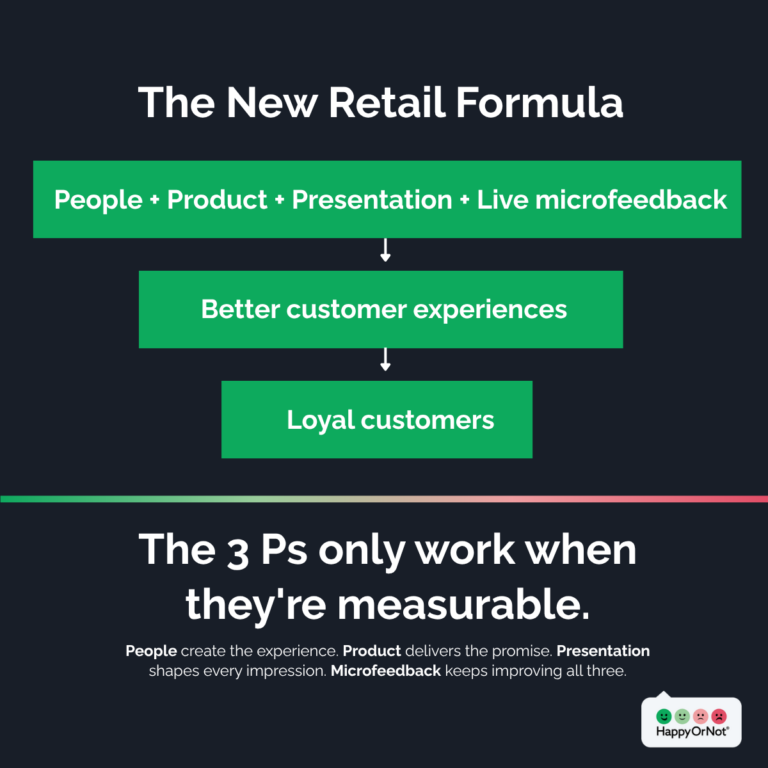
- What it means: People is your frontline, the staff who greet, advise, serve and check out your customers. They are the single biggest driver of how a store feels.
- Why it matters: Friendly, knowledgeable service is consistently one of the strongest contributors to customer satisfaction. In HappyOrNot’s 2025 Retail CX Insights Report, staff friendliness scored among the highest satisfaction drivers globally, evidence that people are not a soft factor but a measurable one.
- Practical actions retailers can take: Train for both competence and warmth, schedule your strongest team members to peak hours, give associates the product knowledge to advise confidently and grant them the authority to resolve issues on the spot.
- How retail feedback supports it: Microfeedback captured at the service desk or exit, tied to time and shift, shows you when and where service is strongest and where it slips, so you can coach with specific examples and recognize the people getting it right.
2. Product
- What it means: Product covers what is on your shelves: Availability, quality, range and fit to the customers a given store serves.
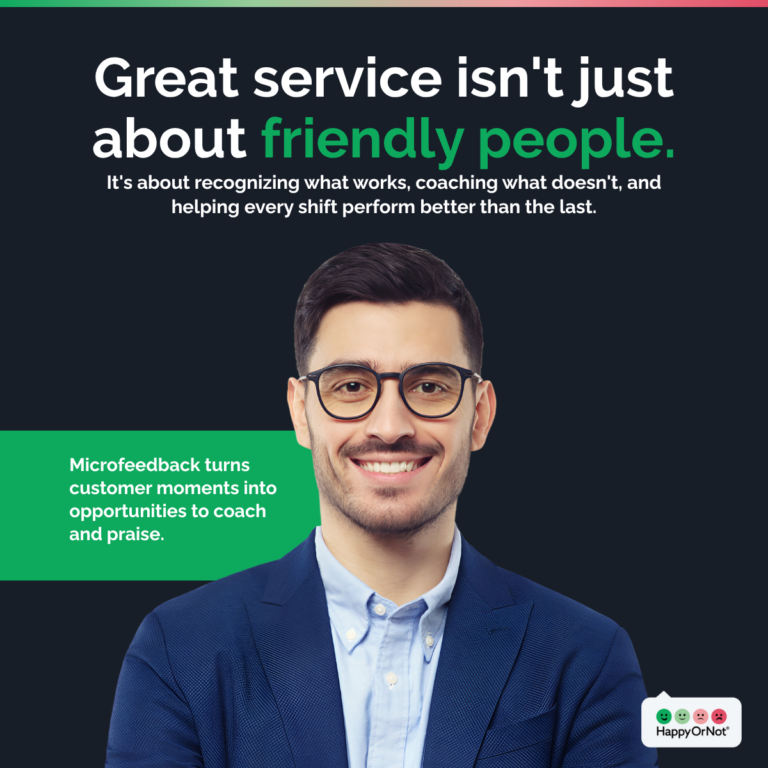
- Why it matters: Even the warmest service cannot rescue a visit if the item the customer came for is out of stock or the range does not match local demand. Product availability and price are among the most common reasons shoppers leave dissatisfied, directly affecting customer satisfaction.
- Practical actions retailers can take: Track which products customers ask for but cannot find, adjust ranges to local demand and offer alternatives when something is unavailable rather than letting the customer leave empty-handed.
- How real-time feedback supports it: At XXL, feedback surfaced specific product and service gaps, including demand the team could act on, helping the retailer recover situations that would otherwise have ended in lost sales. When feedback is tied to a specific location, product issues show up exactly where they occur.
3. Presentation
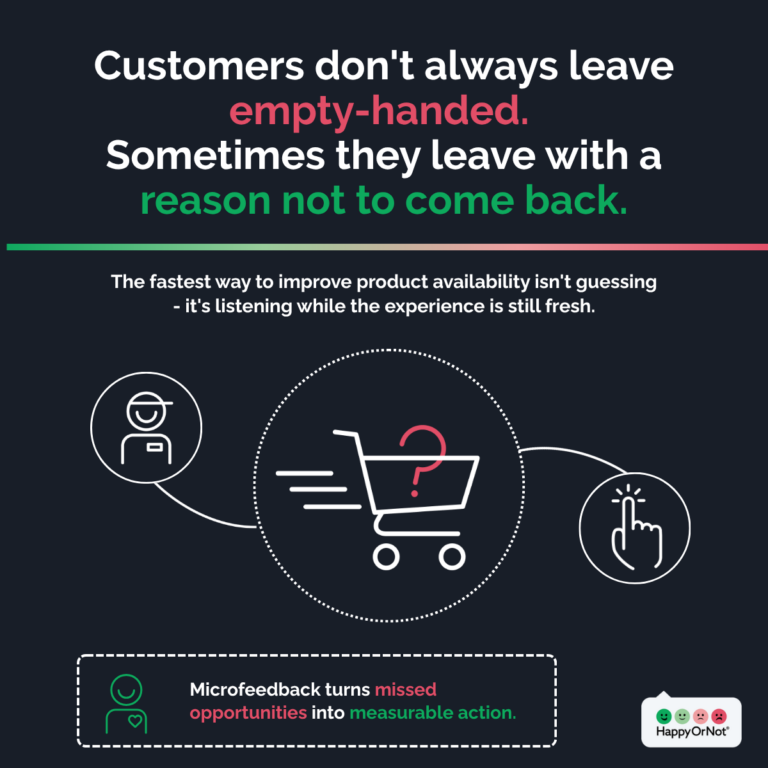
- What it means: Presentation is everything the customer sees, hears and feels in the space: Layout, displays, cleanliness, signage, clear pricing and the visibility of offers.
- Why it matters: Presentation shapes the experience before a word is exchanged. A cluttered aisle, unclear price or long, disorganized queue can undo good people and good product in seconds, reducing customer satisfaction before a purchase is even complete.
- Practical actions retailers can take: Keep the floor clean and navigable, make pricing and promotions unmistakably clear and design the checkout to minimize friction at busy times.
- How real-time feedback supports it: A sudden satisfaction dip at a specific store and hour is often the first sign that something in the environment needs attention, an empty shelf, a spill, a confusing display, while there is still time to fix it before the next customer arrives.
How real-time customer feedback strengthens the 3 Ps
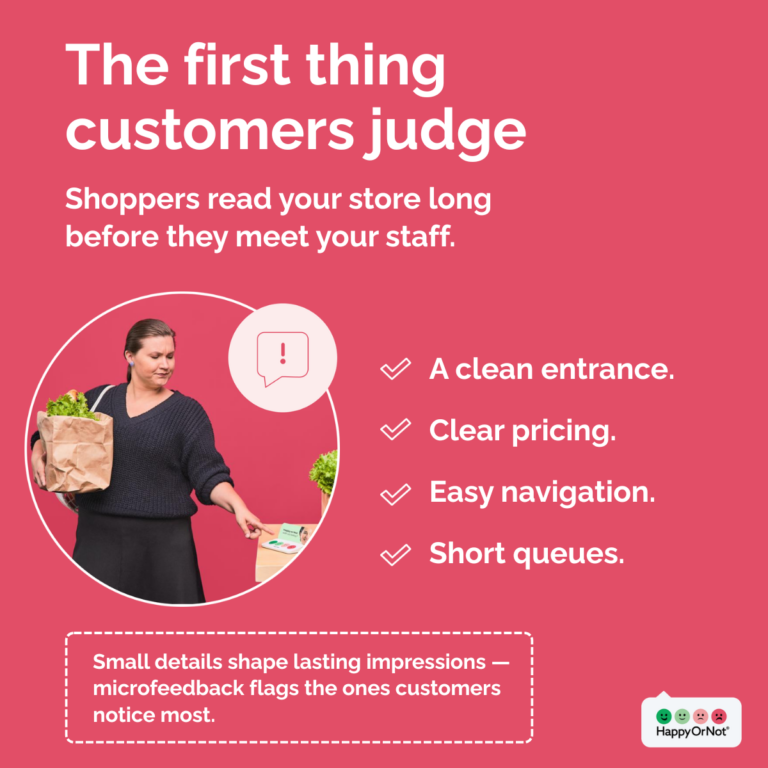
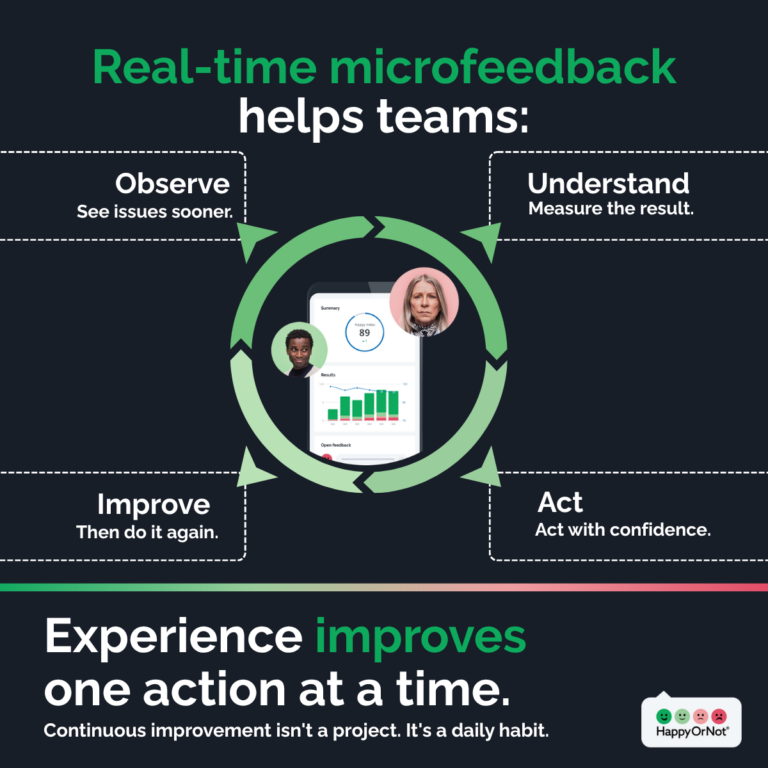
What turns the three Ps from a concept into an operating model is the signal underneath them. Real-time microfeedback strengthens all three pillars, creating a practical framework for continuous customer experience improvement:
- Faster issue detection: Problems with people, product or presentation surface the same day, not in a quarterly report.
- Frontline coaching: Managers get concrete, current examples to recognize strong service and address gaps.
- Local decision-making: Because signals are tied to a specific store, each location can act on its own reality rather than a network-wide average.
- Continuous optimization: With an always-on signal, retailers can test a change, confirm it worked and replicate it across stores, accelerating customer experience improvement.
This is why Lidl Sweden deployed real-time feedback across more than 210 stores: It lets teams capture customer feedback in the moment and act on deviations directly in the store environment, supporting continuous improvements in customer satisfaction across every location.
Common retail customer experience mistakes
- Relying on assumptions instead of customer feedback: What the head office believes about a store and what customers experience there are often different. Let the signal, not the assumption, set the priority.
- Measuring performance without taking action: Tracking the three Ps is only useful if the data triggers a decision. Measurement without action is just reporting.
- Applying the same strategy across every location: Each store has its own customers, staff and pressures. A model that improves the three Ps locally beats a one-size-fits-all rollout.
Key takeaway
The new three Ps of retail customer experience, People, Product and Presentation, capture what shapes how a store feels today. But their real value comes from treating them as an operational model rather than a static framework. Attach a live signal to each pillar, give frontline teams the data and the authority to act and improve a little every day. That is how retailers turn the three Ps into lasting customer satisfaction, retail customer loyalty, and stronger customer retention in retail.
HappyOrNot helps retailers measure and improve People, Product and Presentation continuously, with in-the-moment signals frontline teams can act on. Explore our retail solutions or browse our Retail CX Insights Reports.