10 ways to increase customer loyalty in the restaurant industry
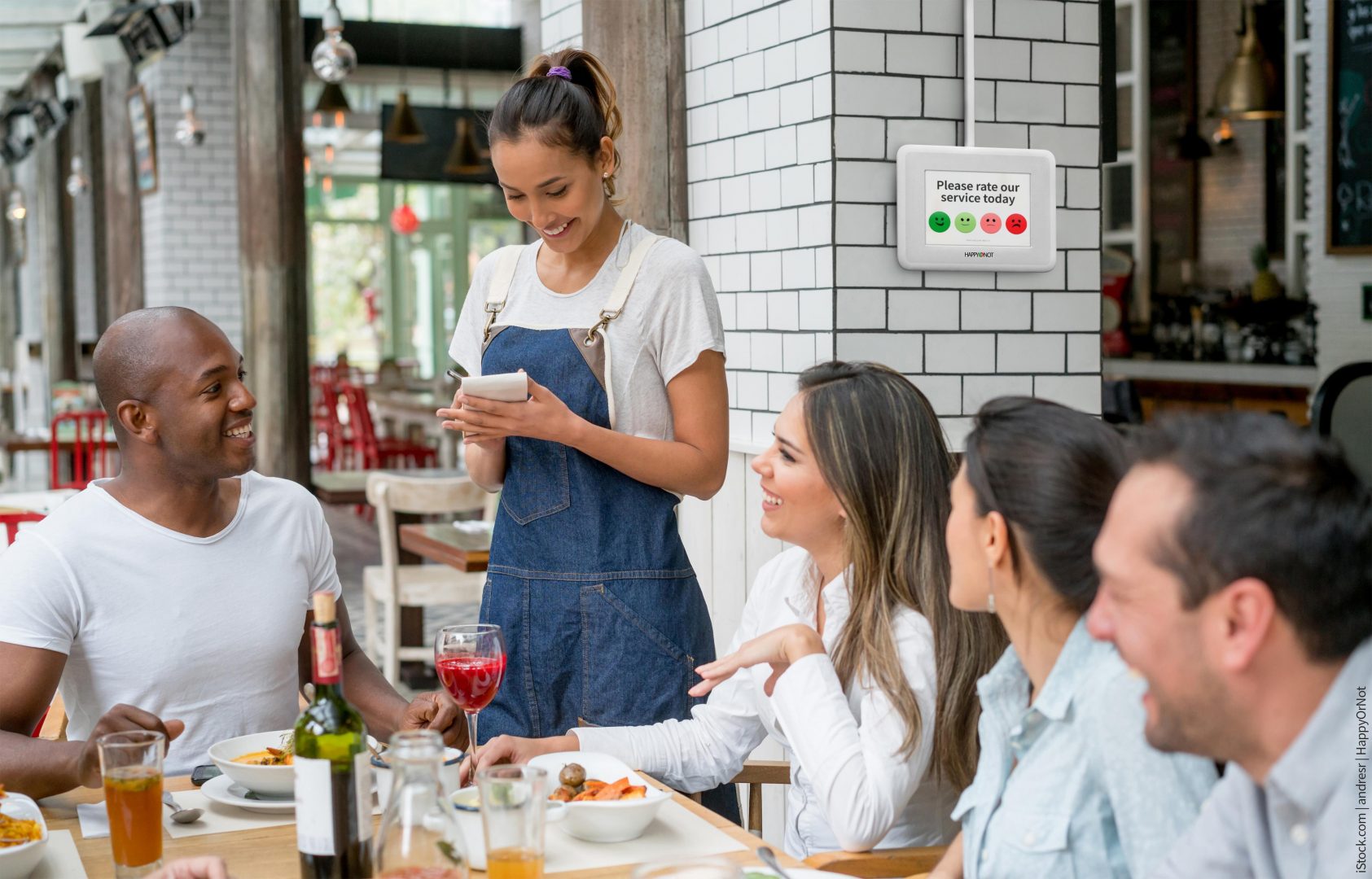
Figuring out how to increase repeat customers in a restaurant is one of the most valuable problems an operator can solve, because repeat guests are where the money is. Olo, drawing on more than 100 million guest records, found that 60% of restaurant revenue is driven by repeat guests. Winning a first visit is expensive; earning the second, third and 10th is what makes a restaurant profitable.
Great food is the price of entry, not the differentiator. Diners have more choice than ever, and a single inconsistent visit, a long wait, a cold dish, an unresolved complaint, is often enough to send them somewhere else for good. Loyalty is not bought with a discount; it is earned by consistently delivering a better guest experience.
That consistency depends on knowing how each guest actually felt while there is still time to act. The most effective restaurants capture real-time feedback through microfeedback: Short, in-the-moment signals gathered right after the meal, so service issues get caught before they cost the next visit. The 10 strategies below show how to turn that signal into repeat customers.
Why restaurants lose repeat customers
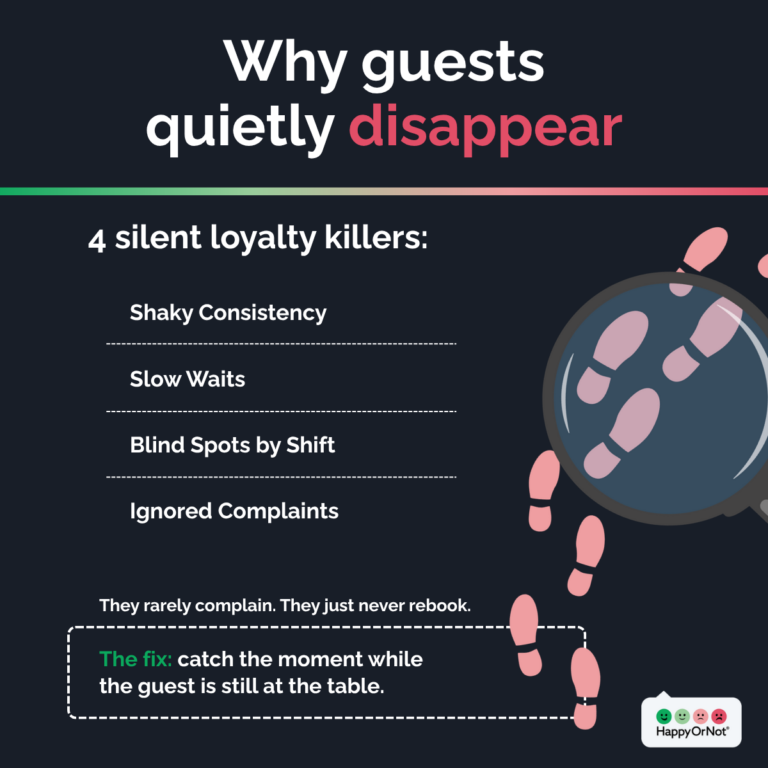
Before the strategies, it is worth naming why guests stop coming back quietly. They rarely complain on the way out; they do not return.
- Service inconsistency: A great Friday and a disappointing Tuesday teach guests they cannot rely on you.
- Long wait times: Slow seating, ordering or service is one of the fastest ways to sour an otherwise good meal.
- Unresolved customer issues: A problem that is never acknowledged in the moment becomes a one-star review and a lost regular.
- Lack of operational visibility: When managers cannot see how guests felt by shift and daypart, problems repeat unseen until the damage is done.
Each of the 10 strategies below closes one of these gaps and gives your team a way to act before a guest decides not to return.
10 ways to increase restaurant customer loyalty
1. Deliver consistently great service
Why it matters: Consistency is the foundation of loyalty. Guests return to places they can count on, every visit, every shift.
Practical implementation: Set clear service standards, then monitor whether they hold up across dayparts and shifts rather than assuming they do.
How real-time feedback supports it: Microfeedback captured by time and shift, using a Smiley Terminal™ at the exit, shows you exactly when service slips, so you can address the Tuesday-night gap before it costs you regulars. You are not limited to a Smiley Terminal™ at the exit: with Smiley Sign™, using table talkers or stickers with a QR or NFC tag, you can capture feedback right at the table or any other touchpoint in the restaurant.
2. Personalize the dining experience
Why it matters: Being recognized, by name, by usual order, by preference, is one of the strongest drivers of repeat visits in hospitality.
Practical implementation: Equip staff to remember regulars and tailor recommendations, and use what you learn about your guests to shape the experience.
How real-time feedback supports it: Feedback patterns reveal what different guest groups value, grounding personalization in evidence rather than guesswork.
3. Reduce friction across the guest journey
Why it matters: Small frictions, a slow greeting, a confusing menu, a long wait for the check, add up to a visit a guest is in no hurry to repeat.
Practical implementation: Map the guest journey from arrival to payment and look for the moments where time and patience drain away.
How real-time feedback supports it: Feedback tied to specific moments pinpoints where friction occurs, so you fix the actual bottleneck instead of guessing.
4. Train and empower your staff
Why it matters: Your team is the experience. Engaged, empowered staff create the warmth guests remember and recommend.
Practical implementation: Invest in training and give frontline staff the authority to resolve problems on the spot rather than escalating.
How real-time feedback supports it: At ISS, a food-service provider, real-time feedback motivated staff directly. As Head Chef Sami Eriksson put it, “The improved customer satisfaction results were motivating our staff who were in turn striving to provide even better customer service.”
5. Respond quickly to customer feedback
Why it matters: The value of feedback decays by the hour. A complaint you can act on tonight is an opportunity; the same complaint read next week is just a regret.
Practical implementation: Review feedback during and after each shift, and act on what needs immediate attention before the next service.
How real-time feedback supports it: ISS used real-time signals to act fast, immediately removing any main course that scored below 60%, a direct, same-day response to what guests were telling them.
6. Improve service recovery
Why it matters: Guests do not expect perfection; they expect repair. A problem resolved well can leave a guest more loyal than if nothing had gone wrong at all.
Practical implementation: Make it easy for guests to flag a problem in the moment and empower staff to make it right before the guest leaves.
How real-time feedback supports it: An in-the-moment signal flags dissatisfaction while the guest is still in the building, turning a would-be lost regular into a recovery opportunity.
7. Build a loyalty program that rewards great experiences
Why it matters: A loyalty program reinforces good experiences; it cannot replace them. Points cannot buy back a guest who left frustrated.
Practical implementation: Layer rewards on top of a consistently strong experience, and measure whether the program actually changes visit frequency.
How real-time feedback supports it: Using HappyOrNot Analytics, you can measure satisfaction before and after launching or changing a program to see whether it is genuinely building loyalty.
8. Optimize the guest journey by daypart
Why it matters: A breakfast guest, a lunch rush and a relaxed dinner are three different experiences with different pressure points and staffing needs.
Practical implementation: Match staffing and service style to each daypart, informed by when satisfaction tends to dip.
How real-time feedback supports it: Because microfeedback is tied to time of day, it shows you exactly which dayparts need more support, turning scheduling into a data-backed decision.
9. Close the feedback loop with guests
Why it matters: Guests give feedback more readily and trust you more when they see it leads to change.
Practical implementation: Act on recurring feedback visibly, whether that means changing a dish, speeding up service or fixing a recurring issue, and let guests know you listened.
How real-time feedback supports it: A fast signal means a short loop: Guests see change on their next visit, not next quarter, which is what turns a satisfied diner into a loyal one.
10. Continuously improve operations
Why it matters: Loyalty is the cumulative result of many small improvements, repeated consistently over time.
Practical implementation: Review signals daily for quick fixes, weekly for recurring patterns and monthly to confirm improvements are holding before standardizing them.
How real-time feedback supports it: Continuous improvement depends on a continuous signal. ISS, a global food-service provider, treated real-time feedback as an everyday operational tool, reviewing results by shift and acting the same day, and saw customer satisfaction climb 20% in the first six months, with daily response rates rising from 50% to over 60% as guests saw their input mattered.
How real-time feedback creates repeat customers
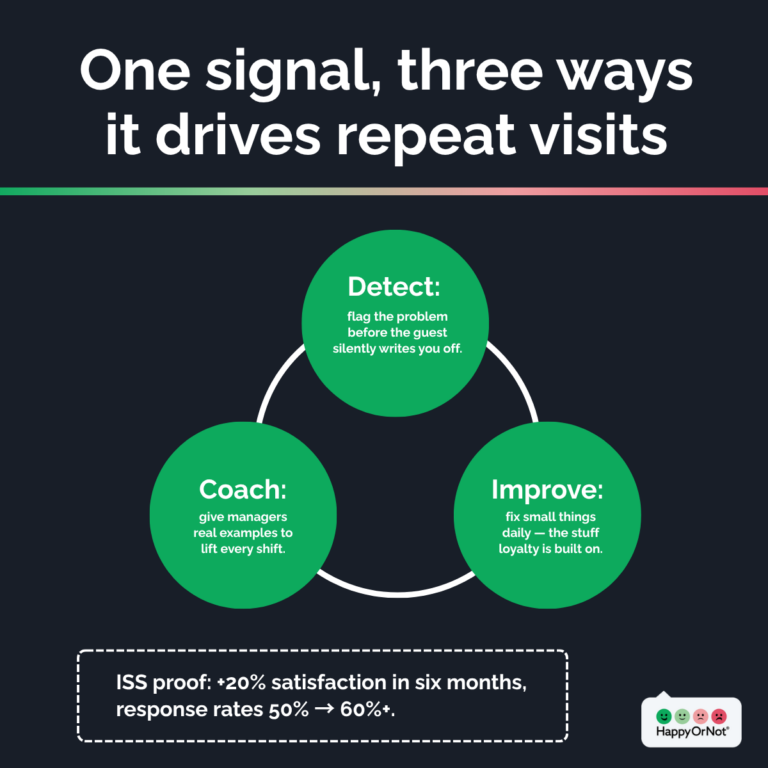
Pull the 10 strategies together, and the same engine drives all of them. Real-time microfeedback creates repeat customers in three ways:
- It detects issues before guests stop returning: An in-the-moment signal catches the problem while the guest is still in the building, not after they have quietly decided not to come back.
- It improves coaching and service consistency: Granular, current data gives managers specific examples to coach with, so service holds up across every shift.
- It drives continuous operational improvement: A steady stream of signals lets teams fix the small things consistently, which is exactly what loyalty is built on.
ISS saw this play out directly: customer satisfaction rose 20% in the first six months, and daily response rates climbed from 50% to over 60% as guests saw their input mattered. That is the loop that turns a one-time diner into a regular.
Common restaurant loyalty mistakes
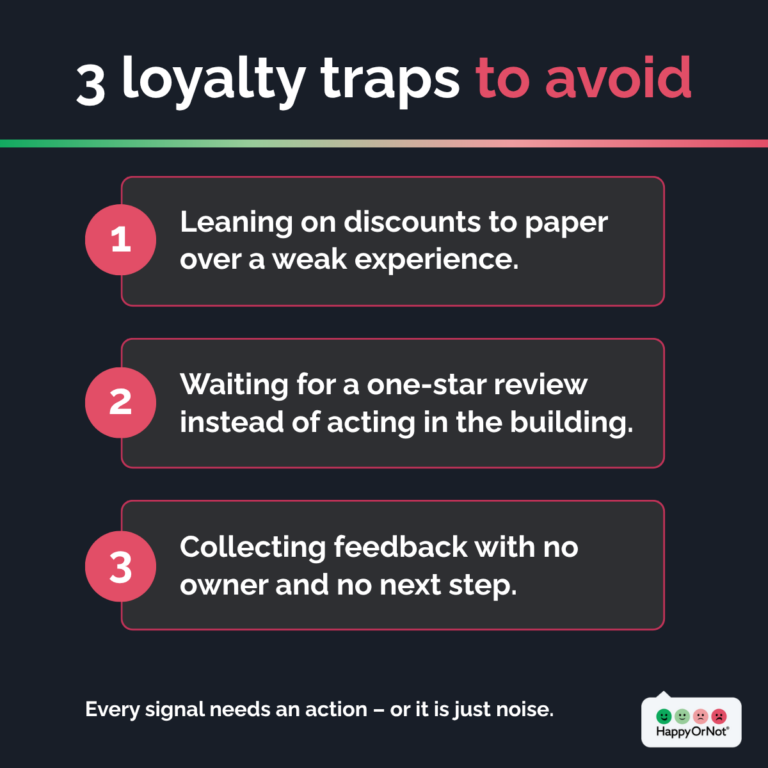
- Depending only on discounts or loyalty programs: Rewards reinforce a good experience; they cannot rescue a poor one. Fix the experience first.
- Waiting for online reviews instead of acting in the moment: By the time a one-star review appears, the guest has already gone. Catch the issue in the building, not online.
- Collecting feedback without operational follow-up: Feedback with no owner and no action is the most common way good intentions stall. Every signal needs a next step.
Key takeaway
Knowing how to increase repeat customers in a restaurant comes down to one principle: loyalty is the result of consistently delivering a better guest experience – a better customer experience – not a discount you offer. With repeat guests driving the majority of revenue, the operators who win are the ones who can see how each guest felt and act on it the same shift. Capture feedback in the moment, empower your team to respond and improve a little every service, and the guests will come back repeatedly.
See how HappyOrNot helps restaurants and food-service teams capture real-time microfeedback after every meal and act on it before the next shift. Explore our food services solutions or read more on building customer loyalty in a restaurant.